How to Remove Tree Sap & Pollen From Outdoor Furniture
Written by: Caitlin Evans
|
Published on
|
Last updated on
|
Time to read 4 min
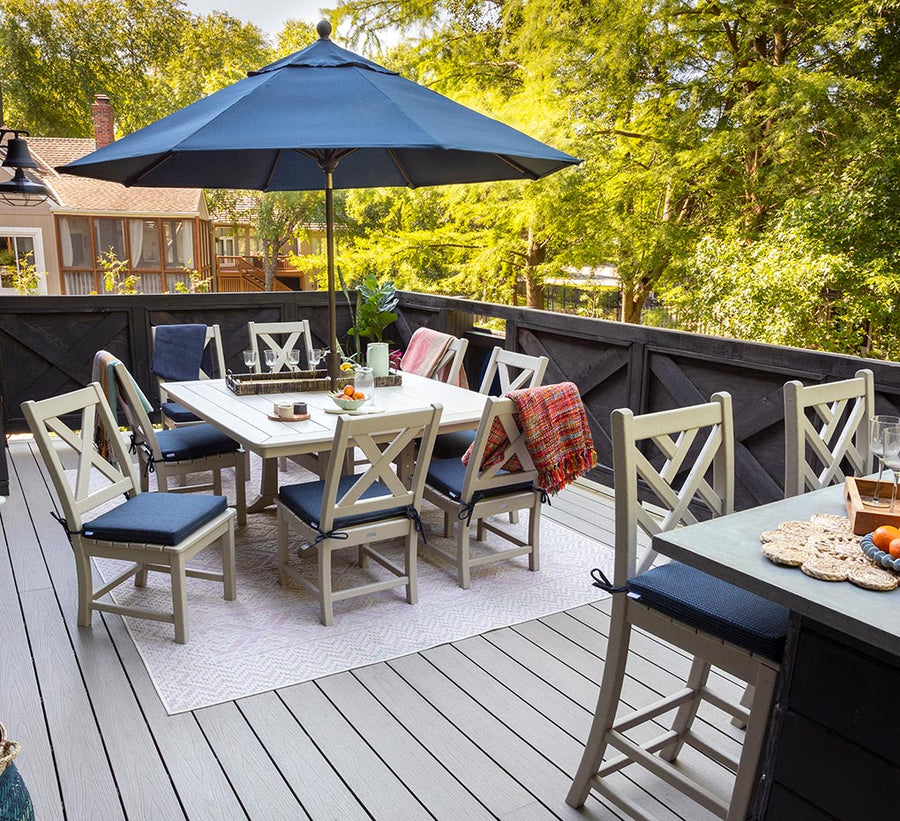
If trees surround your deck or patio, you've undoubtedly dealt with sap and pollen speckling your outdoor furniture come spring and summer. And you're not alone: Homeowners all over the country battle them too.
But we can help you out of these sticky, unsightly situations. Keep reading to see practical, easy methods for effectively removing sap and pollen from various patio furniture and cushion materials, helping you maintain the cleanliness and beauty of your outdoor space all season long.
When exposed to plant byproducts like pollen and sap, certain furniture materials are more susceptible to damage.
Pollen
When dry, pollen is harmless to outdoor furniture. However, when it gets wet, a chemical reaction occurs that can lead to tough stains and even corrosion on certain materials, such as wrought iron and aluminum, if it's not quickly removed.
Sap
If tree sap lingers too long on furniture, it can lead to stains and discoloration. On top of that, everything sticks to it. Dirt, dust, pet hair, and other debris will easily adhere to sap and create a bigger mess.
Removing Tree Sap and Pollen From POLYWOOD Furniture
Browse the cleaning methods below to learn how to remove sap and pollen from our high-density polyethylene (HDPE) lumber, outdoor performance fabrics, and powder-coated aluminum.
HDPE Lumber
Steps for Removing Tree Sap
Supplies Needed
Undistilled white vinegar
Water
Plastic bucket or bowl
Soft-bristle brush
Instructions
In the bucket, mix equal parts vinegar and water.
Scrub the mixture over the stain with the brush until it's gone.
Rinse with clean water and let the furniture air-dry.
PRO TIP: Rubbing alcohol also works in place of vinegar.
Mix a few drops of dish soap with some warm water.
Wipe the soapy mixture over the aluminum with the sponge.
Rinse your furniture with clean water and dry it with the towel.
Watch and Learn
Explore additional methods to keep tough stains off POLYWOOD furniture and cushions.
Cleaning Tree Sap and Pollen Off Different Surfaces
Follow these steps to effectively eliminate tree sap and pollen from a variety of outdoor furniture materials, including wood, aluminum, wrought iron, injection-molded plastic, and wicker.
Wood
Supplies Needed
Rubbing alcohol
Water
Plastic bucket or bowl
Cloth or soft sponge
Towel
Instructions
Mix rubbing alcohol and water in the bucket at a 1:1 ratio.
Apply the solution with the cloth or sponge, gently scrubbing the affected area to remove the stain.
Rinse with clean water and towel-dry the furniture.
Wrought Iron, Wicker, and Injection-Molded Plastic
Supplies Needed
Mild dish soap
Water
Plastic bucket or bowl
Soft sponge
Rubbing alcohol
Clean cloth
Towel
Instructions
Mix soap and water in the bucket.
Use the sponge to gently scrub the soapy solution over stains and rinse with clean water.
Wipe rubbing alcohol onto stains with the cloth, carefully dabbing at them until they’re gone.
Rinse once more with clean water and towel-dry the furniture.
Prevention Tips
Here are some easy ways to keep your outdoor furniture safe from sap and pollen now and in the future.
Trim trees: Trim back trees or shrubbery to reduce the likelihood of sap or pollen landing on your furniture.
Consider placement: Avoid positioning furniture directly under trees or near landscaping that produces a lot of sap or pollen.
Regular cleaning: Remove pollen and sap before it has a chance to build up.
Use covers: Use protective covers to shield furniture from the elements.
Try protective coatings: Shield your furniture from sap and pollen with these protective coatings:
Cait is an Indiana-based creative content writer who has been with POLYWOOD since 2020. She’s a Purdue alumna, a proud logophile (word nerd), and an advocate of the Oxford comma. In her free time, Cait loves gardening, cooking, running, camping, and spending time with her husband and four fur children.
















 POLYWOOD


