How to Choose the Right Size Pergola for Your Backyard
Written by: Caitlin Evans
|
Published on
|
Last updated on
|
Time to read 10 min
Dining, relaxing, chatting—it’s simply better when it’s done outdoors. But rainy days and glaring sun can ruin even the best laid plans. What’s the solution to staying comfortable outside when the forecast is frustrating?
Pergolas.
Available in a range of sizes, from small 8x8 feet designs to large 20x20 feet structures, pergolas can bring style and shade to just about any space. Choosing the right pergola size is crucial. It shapes the overall look and comfort level of an outdoor area. We created this guide to address key considerations to help you pick the perfect-fit pergola.
A pergola is a freestanding or attached outdoor structure that provides partial shade and visual appeal to patios, walkways, and other outdoor spaces. They’re typically built with vertical posts that support crossbeams or lattice-style roofs, and the open sides allow easy airflow.
Unlike gazebos, which have solid, slanted tops, pergolas let in the sunshine—though modern designs can have louvered or retractable roofs—and the open gaps in the ceiling are often decorated with climbing plants or string lights.
Decide Your Pergola’s Purpose
Think about your favorite outdoor activities, then select the accommodating pergola size.
Pergola Size Guide
Primary Use
Recommended Minimum Size
Notes
Bistro-reading nook
8x8–10x10 ft.
Great for small patios under 100 sq. ft.
Dining (4–6 people)
12x14 ft.
Requires 3 ft. of clearance on all sides for easy walking and sitting
Sectional/sofa set
12x16 ft.
Great for medium or large patios
Outdoor kitchen/hot tub
14x20 ft. or larger
Requires stronger foundations and a larger budget
Pro tips:
Required clearances for louvered pergolas differ slightly from traditional designs, so plan accordingly.
If you plan to build a pergola over a multiuse space, use the activity with the largest footprint as your baseline.
Measure and Map Your Available Space
To determine the appropriate pergola size, you’ll need to find out how much room you have to work with. Don’t skip this step—it ensures you’ll avoid costly shopping and style mistakes.
How to Measure Your Outdoor Space
Grab a tape measure (or laser distance measure for faster and more accurate measurements) and head outside. You’ll want to find the length and width of your outdoor space, wall heights if you plan to attach your pergola to your house, and elevation differences.
We also recommend drawing a rough sketch of your space and including the dimensions as well as all fixed elements in the vicinity, such as bordering walls or fences, railings, entrances, landscaping, HVAC units, and overhead and underground utility lines.*
Get a more in-depth look at how to find the dimensions of your outdoor space.
*IMPORTANT NOTE: Knowing the location of gas and other utility lines prior to digging post holes is legally required for safety and code compliance. Contact your local utility company or similar service to get these sites marked before you dig.
Plan Your Furniture Layout
You want to complete this step before moving on to pergola shopping because it will help you account for walking and furniture spacing clearances.
Define Your Furniture Setup
Draw your desired furniture arrangement on your sketch inside the planned pergola space. Include every piece and its approximate dimensions: dining chairs, tables, sofas, fire pit tables, etc.
There should be at least three feet of space between furniture and pergola supports to allow room to walk.* This also makes space for motorized components if you’re planning to build a louvered pergola. If your design barely fits on the sketch, don’t try to force it. Instead, opt for smaller furniture sets or a larger pergola.
To help you plan, browse this list of outdoor layouts and their minimum clearance requirements:
4-person dining table: allow at least 8x10 feet
6-person dining table: allow at least 10x12 feet
L-shaped sectional: allow at least 10x10 feet
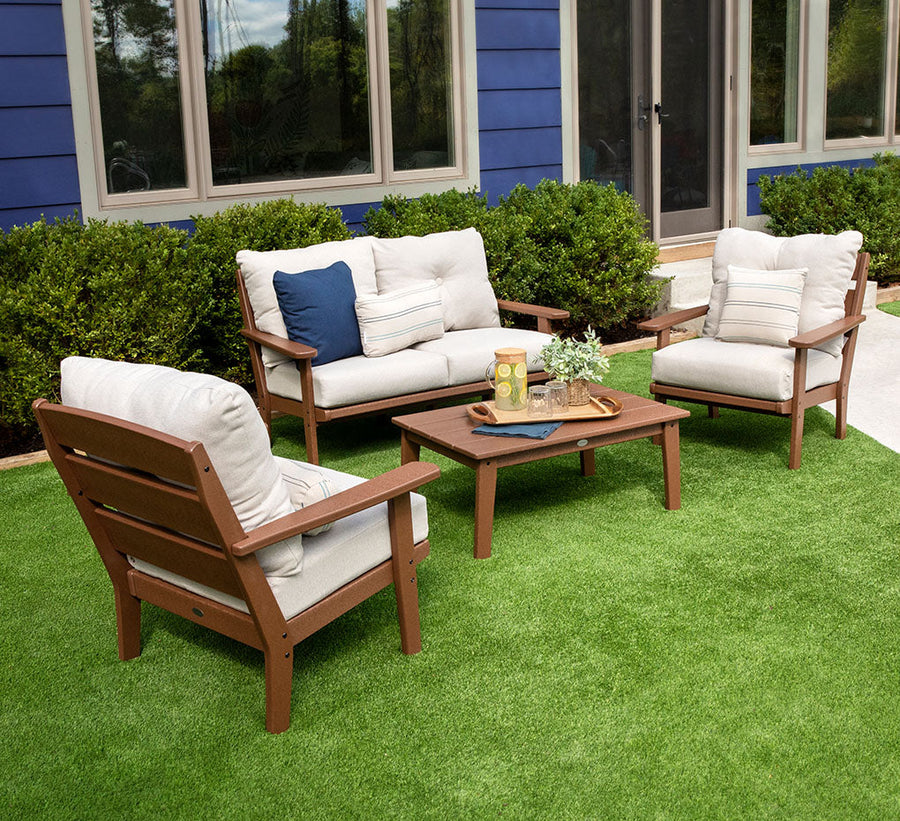
Lounge seating (sofa and two chairs): allow at least 10x12 feet
Fire pit seating area: allow at least 10x10–12x12 feet, depending on spacing
Hot tub (standard 7x7 feet): allow at least 10x10–12x12 feet with a three-foot walkway on all accessible sides
Chaise lounge set: allow at least 6x10 feet
Outdoor bar or counter seating: allow at least 8x10 feet
Kids’ play area or open space: allow at least 8x8 feet
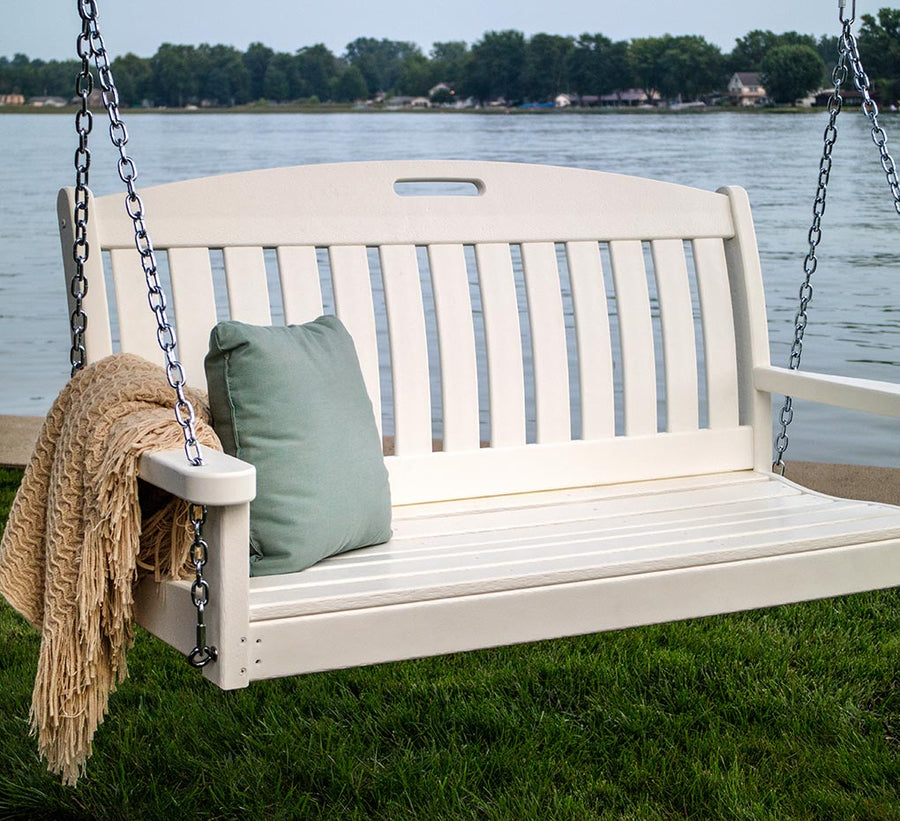
Porch swings: allow at least 12x10 feet, with three feet of space on all sides for safe movement
*IMPORTANT NOTE: Post thickness also impacts spacing and clearance. Supports in pergola kits are typically six inches thick, so keep that in mind when planning.
Choose the Best Pergola Size
Find the just-right pergola size and shape for your space with these tips.
Appropriate Pergola Proportions
To maintain visual balance, a pergola should cover between 25 and 40 percent of the available space on your deck or patio. If you want to calculate the correct size, multiply the area of your patio by these percentages.
Example: The area of a 20x20-foot space is 400 square feet. 400 x 0.25 = 100 square feet, and 400 x 0.4 = 160 square feet. Therefore, the pergola’s size should be between 100 and 160 square feet.
Go for Gold
To achieve optimal balance and visual appeal, use the Golden Ratio (roughly 1.618:1) to calculate the perfect pergola size. This means the length should be about 1.6 times the width.
L = 1.6W
Area = 1.6W2
Let’s apply the Golden Ratio to find a pergola that fits the upper end of the 100–160-square-foot range from the example above.
160 = 1.6W2
160 ÷ 1.6 = 100
√100 = 10
W = 10
Now let’s find the length.
1.6 x 10 = 16
A 10x16-foot pergola fits the target area and has the ideal proportions.
Clarifying Dimension Labels
Pergola dimensions are sometimes labeled in different terms, and this varies by manufacturer. Instead of Length x Width, you might see:
Rafter Length x Beam Length
Projection x Width
Depth x Width
Rafter length, projection, and depth all mean the same thing: front-to-back measurements. Beam length and width are also the same, and refer to side-to-side dimensions.
It’s a good idea to familiarize yourself with these terms so you know what you’re looking at when comparing pergolas. And remember that while terms may differ, the physical dimensions stay consistent.
*IMPORTANT NOTE: Knowing the location of gas and other utility lines prior to digging post holes is legally required for safety and code compliance. Contact your local utility company or similar service to get these sites marked before you dig.
Find the Right Pergola Height
A pergola that towers over your patio or sits oddly low throws off the entire aesthetic. One that sits at the right height feels open and inviting—plus, it complies with your local building codes.*
So, how do you find the appropriate pergola height for your patio space?
Here’s a good rule to follow: Never set the bottom of a beam lower than seven feet to maintain adequate headroom. This is the part of a pergola’s roof that you walk beneath, and ensuring it’s high enough allows you to pass under it without bumping your head or feeling cramped.
An eight-foot bottom beam is standard, yielding about 10 feet to the top of the rafters. If you plan to add a ceiling fan or lights, we recommend raising the bottom beam clearance to nine feet.
Maintain Proportions
Pergolas typically stand between eight and 12 feet tall, and the most common sizes offered are eight, 10, and 12 feet. Go shorter if you prefer cozy, intimate vibes, and taller if you want an open, airy feel. Just remember to keep the height proportional to the overall size—a pergola that’s squat and wide looks smothering, while one that’s tall and slim appears frail and gangly.
Don’t Forget the Foundation
The larger and taller your pergola is (14x20 feet or bigger), the stronger the foundation needs to be. Here are general installation guidelines (but always check your local building codes depth requirements):
Freestanding pergolas: 30 inches deep for all posts
Attached pergolas: 30 inches deep for outer posts
An Extra Detail About Attached Pergolas
In addition to columns, an attached pergola mounts to your home with a ledger board. Most people forget to factor in fastener height and clearances around supports. Avoid this by adding a few more inches to the column height when figuring out where it connects to your house. The measurements below are estimates, as designs vary:
8” for vinyl and fiberglass
9.5” for cPVC
12”–18” for wood (combined height of beams and rafters)
6”–10” for aluminum
*IMPORTANT NOTE: Check your local zoning laws for appropriate dimensions before starting your pergola project. In many suburban areas, the maximum allowed height for pergolas is 10 feet.
Select the Best Pergola Materials
The right building material for your pergola will depend on your local climate, desired look, budget, available space, and other factors.
Pergola Material Comparison
Material
Key Benefits
Considerations
Maintenance
Best Climates
Not ideal For
High-density polyethylene (HDPE)
Durable and weather-resistant; won’t fade, crack, or splinter. Made from recyclable materials
Pre-made designs don’t allow much customization
Very low
Coastal, humid, cold, and high-UV areas
Very few limitations; may not fit tight budgets
Aluminum
Lightweight, rust-resistant, modern look
Higher upfront cost; can get too hot to touch in prolonged exposure
Low
Coastal, humid, rainy, and dry climates
Cold climates with heavy snowfall; natural, rustic, or traditional aesthetics
Wood
Natural look, strong structural performance, design flexibility and customization
Requires regular refinishing; can warp, rot, or attract insects without upkeep
High
Mild, dry climates
Humid, coastal, or rainy environments; spaces where low upkeep is a priority
Vinyl
Clean, uniform appearance; resists moisture, insects, and rot; low-maintenance and budget-friendly; holds color well
Limited customization; can expand/contract as temperatures change; not as strong as HDPE or wood
Low
Moderate climates
Hot climates, areas with heavy winds, rain, or snowfall; applications requiring higher structural strength
Mark Your Pergola’s Place in Your Backyard
Physically marking the space where you plan to build your pergola gives you the opportunity to catch any measurement errors and make last-minute layout adjustments. All you need are a tape measure and some stakes or marking tape to get the job done.
Mark your layout: Use stakes or markers to outline the pergola’s footprint based on your selected size or plan.
Test your space: Place your outdoor furniture inside the layout and walk around it—make sure you have at least three feet of clearance on all sides.
Check the height: Stand inside the space and hold a measuring tape at about eight feet to get a feel for headroom.
Review sightlines: Look at the pergola area from nearby doors and windows to ensure it doesn’t block views or feel too imposing.
Look overhead: Make sure there are no tree branches, rooflines, or utility lines that could interfere with the structure.
Confirm local requirements: Check building codes and HOA guidelines, and find out if a permit is needed—larger structures often require one.
FAQs
What size pergola do I need for a dining table?
A 10x12-foot pergola or larger fits over a six-person dining table and allows room to move and sit comfortably. For tables that seat eight or more people, a 12x16-foot pergola or larger works best.
How do I measure my backyard for a pergola?
Measure the length and width of your available space, then mark the area with stakes or tape to see how it will fit.
What is the minimum height for a pergola?
The underside of the lowest part of your pergola’s roof should be at least seven feet high to ensure adequate clearance so you can walk underneath comfortably.
What is the difference between a pergola and a gazebo?
A pergola is square or rectangular, and has open sides and a lattice or grid-style roof that offers partial shade. A gazebo is octagonal or hexagonal, has a solid roof, and the design is more enclosed.
Should I buy a standard pergola kit or a custom pergola?
Pergola kits are less expensive and easier to install than custom builds, but cannot be tailored to meet specific design or size requirements. Custom pergolas are more expensive, but can be made to your exact specifications.
What size pergola fits over a hot tub?
A 10x10 or 12x12-foot pergola fits over a standard 7x7-foot hot tub and allows space to walk and handle maintenance.
How much of my yard should a pergola cover?
A pergola should occupy 25–40% of the space in your backyard. Going any larger can make the area feel crowded.
Do I need a permit to build a pergola?
You typically need a building permit for larger pergolas, especially if they exceed 200 square feet or 10 feet in height. Check with your HOA or local building department for permit requirements.
Cait is an Indiana-based creative content writer who has been with POLYWOOD since 2020. She’s a Purdue alumna, a proud logophile (word nerd), and an advocate of the Oxford comma. In her free time, Cait loves gardening, cooking, running, camping, and spending time with her husband and four fur children.



















 POLYWOOD
 Categories


