The Complete Guide to Buying an Outdoor Dining Set
Written by: Sarah Schultz
|
Published on
|
Last updated on
|
Time to read 10 min
Dining alfresco is one of life’s greatest joys. And when it’s from the comfort of your own backyard? Even better. Forget those hard-to-get reservations and exorbitant cocktail prices—with the right furniture, you can transform your patio, balcony, or deck into a dream dining destination. Read on to discover the best tables, chairs, and accent furniture for your space and hosting style.
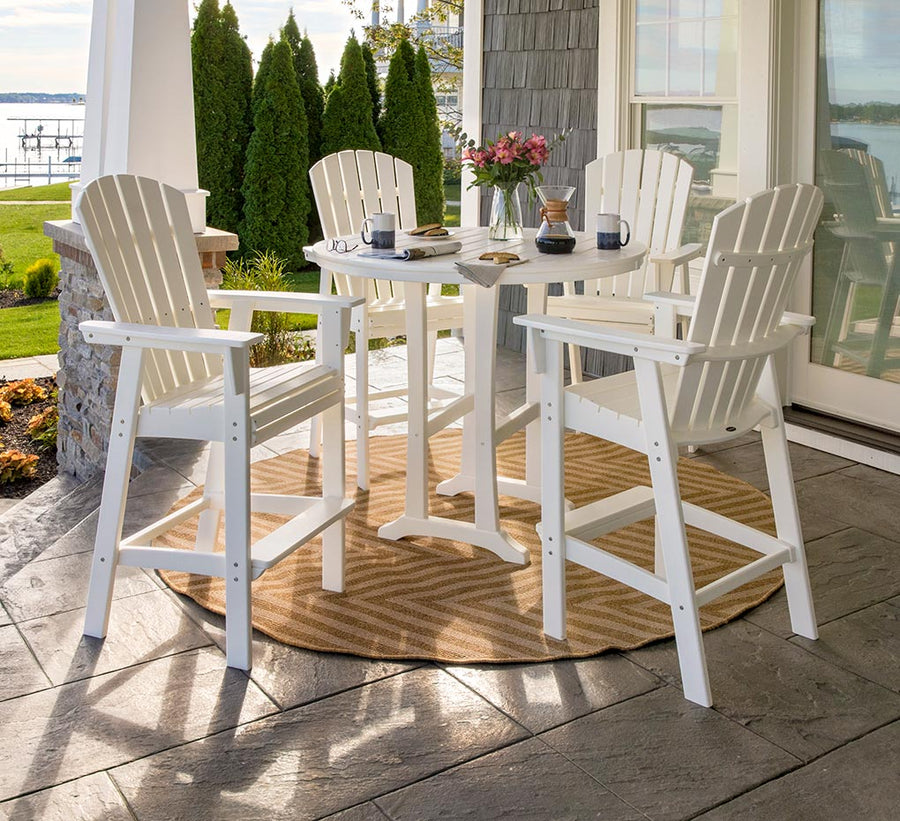
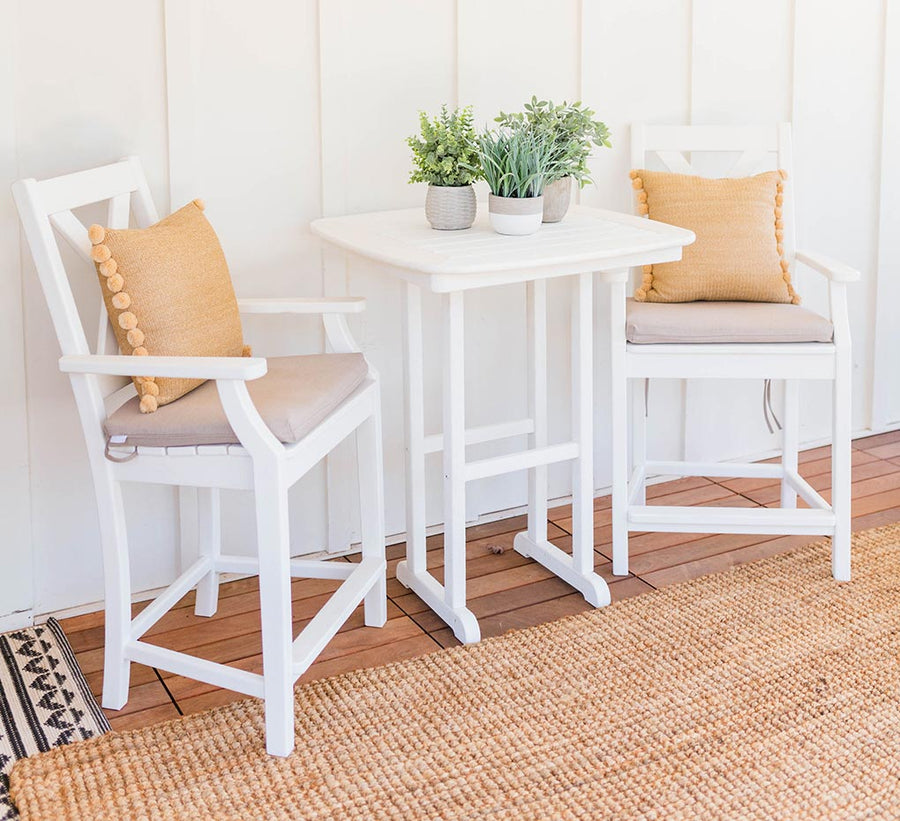
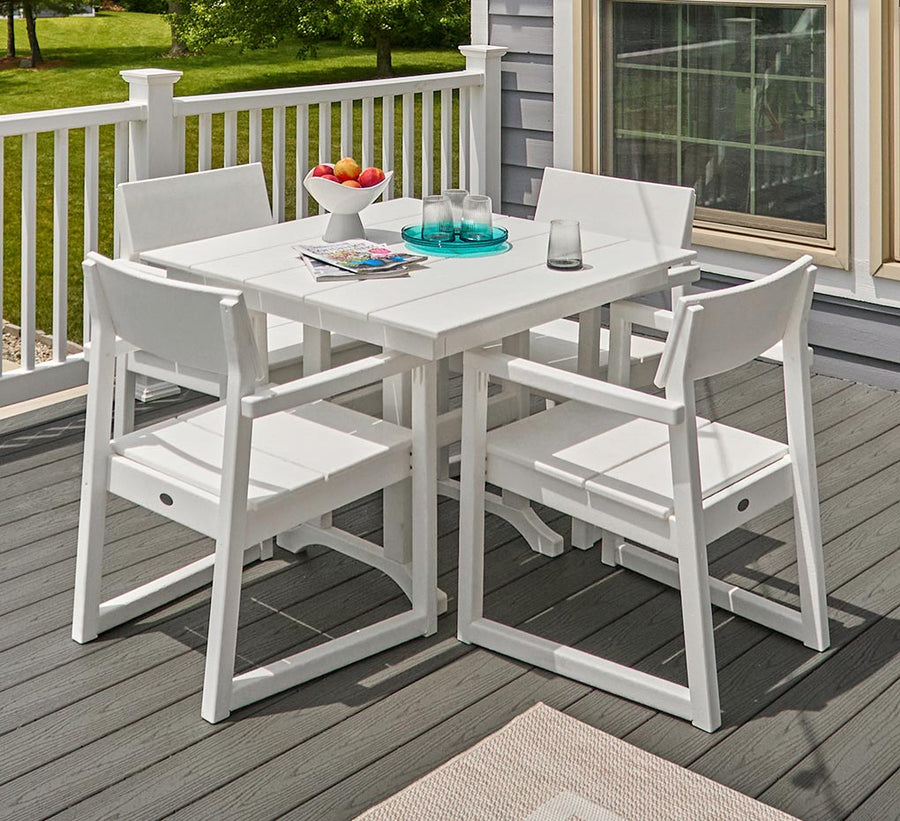
Dining furniture typically comes in three height options: standard, counter, and bar. Standard dining tables are lowest to the ground, typically between 28 and 32 inches tall. The seat height of standard dining chairs is between 16 and 20 inches. Counter furniture is slightly taller; bar furniture is the tallest option.
Standard-height dining furniture is versatile enough to dress up or down, easily transitioning from a casual weeknight meal to a formal dinner party. It’s also a practical option for young families and multigenerational gatherings, as the chairs are easiest to get in and out of. That said, counter and bar furniture is a better option for taller folks.
Step 2: Determine Usable Space
Now that you’ve determined the right height for your dining set, it’s time to see how much usable square footage you’re working with. (This is crucial before getting to the next step.) Use painter’s tape to mark out how much floor space you can comfortably allocate to your dining set and jot down those measurements.
We recommend leaving three feet of clearance on all sides of dining sets so there's enough room to pull out chairs and walk around without bumping into walls or surrounding furniture. Here’s a quick formula to follow to ensure you pick furniture that fits your space.
Now that you know how much room you have for a dining set, consider how many people you want to accommodate—as well as the events you plan to host. Even if you have room for an eight-person set, it may not be the best option if you don’t host large groups frequently.
And if you’re short on space but enjoy having everyone over for game nights or dinner parties, you can opt for a leaf table and folding chairs that store when not in use.
Step 4: Find Your Styles
Seating
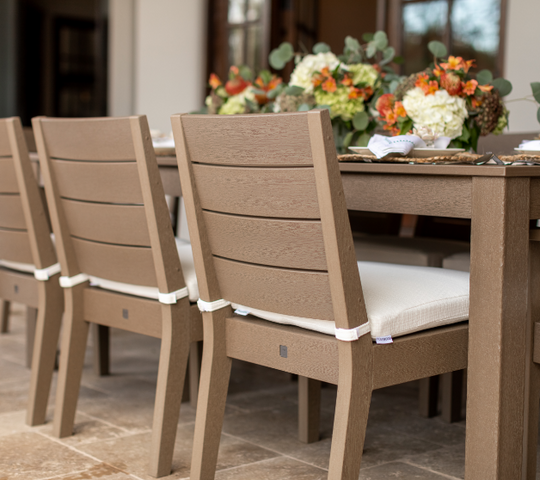
When it comes to your dining chairs, comfort is key. Whether lingering over another round or playing an hours-long card game, you want seats that feel supportive, ideally with 24–30 inches between guests to allow plenty of elbow room.
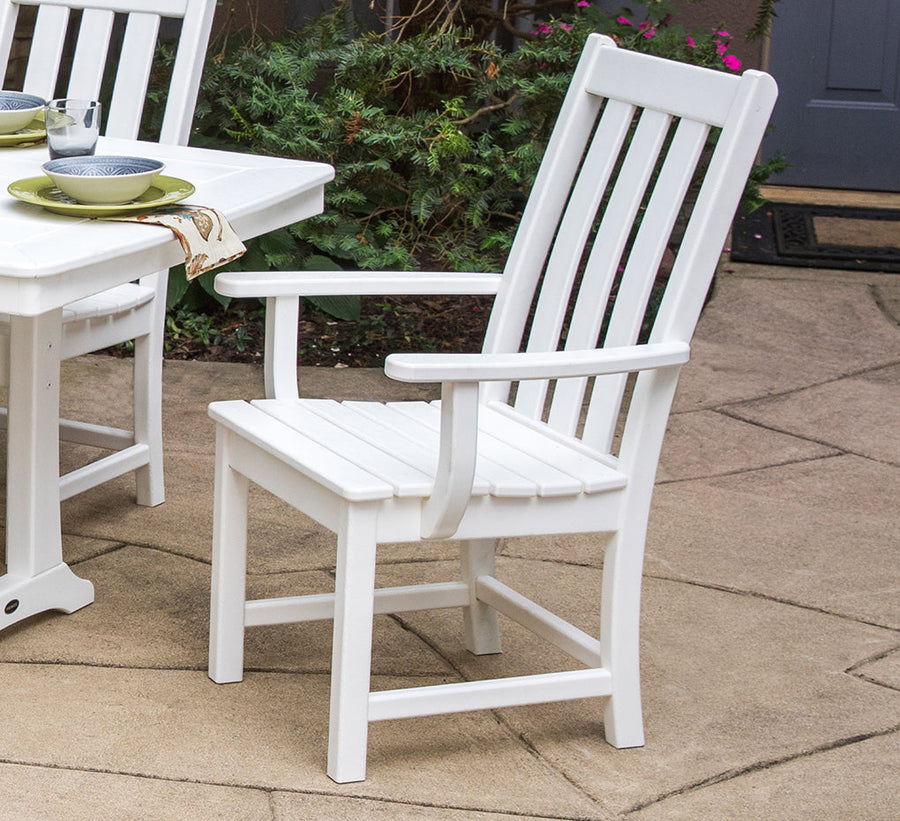
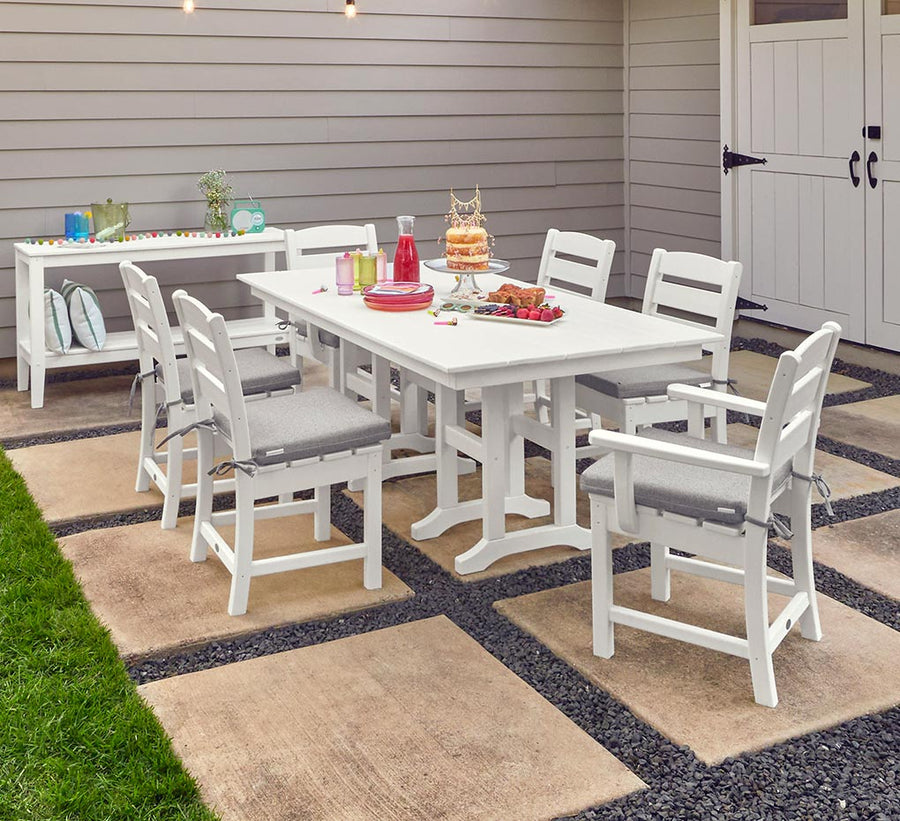
Arm chairs: Armrests enhance comfort and personal space but restrict the ability to add extra seats to the table.
Side chairs: Armless design optimizes room around the table and is easy to get in and out of when space is tight; less comfortable for extended sitting.
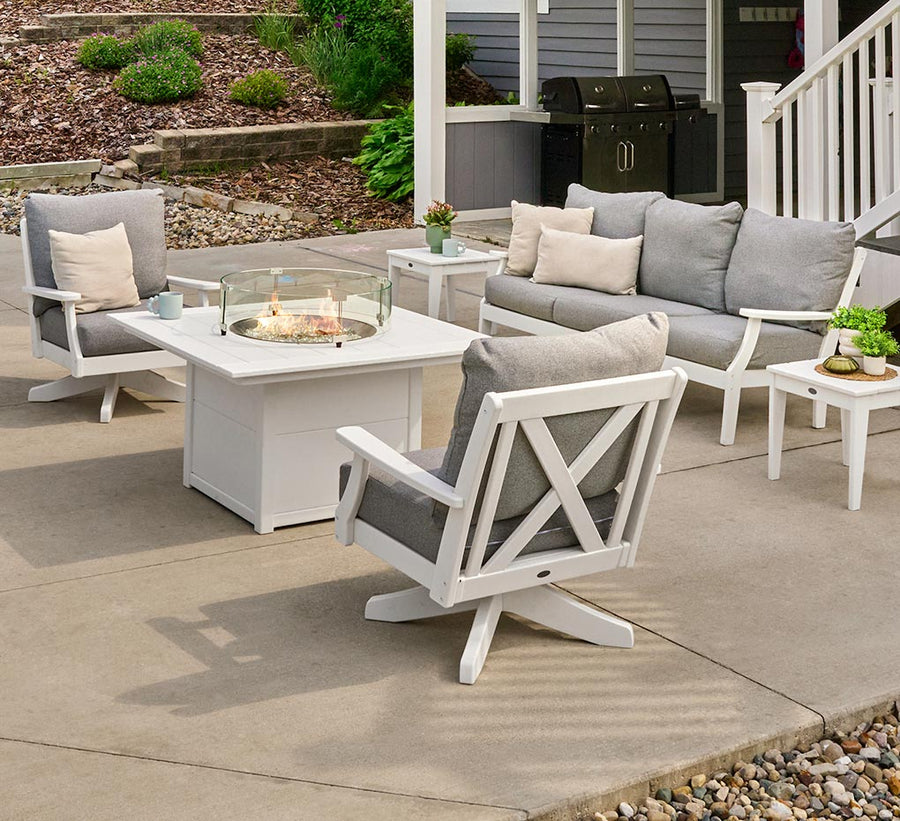
Swivel chairs: Provides a 360-degree view without moving your chair but the heavy bases make them harder to move when needed.
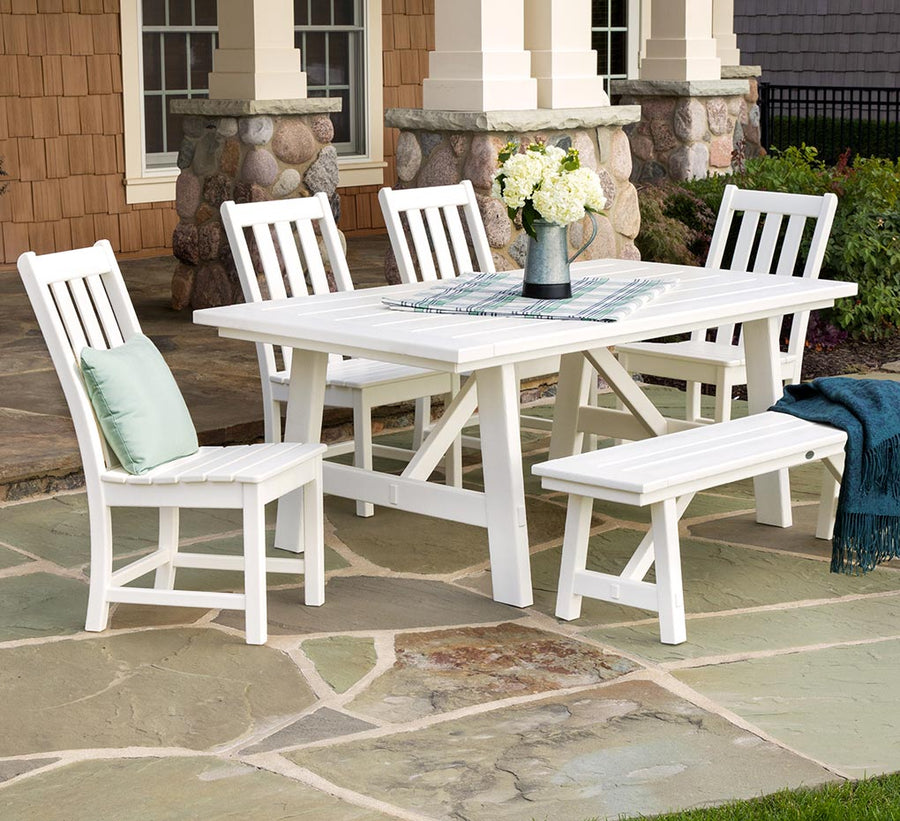
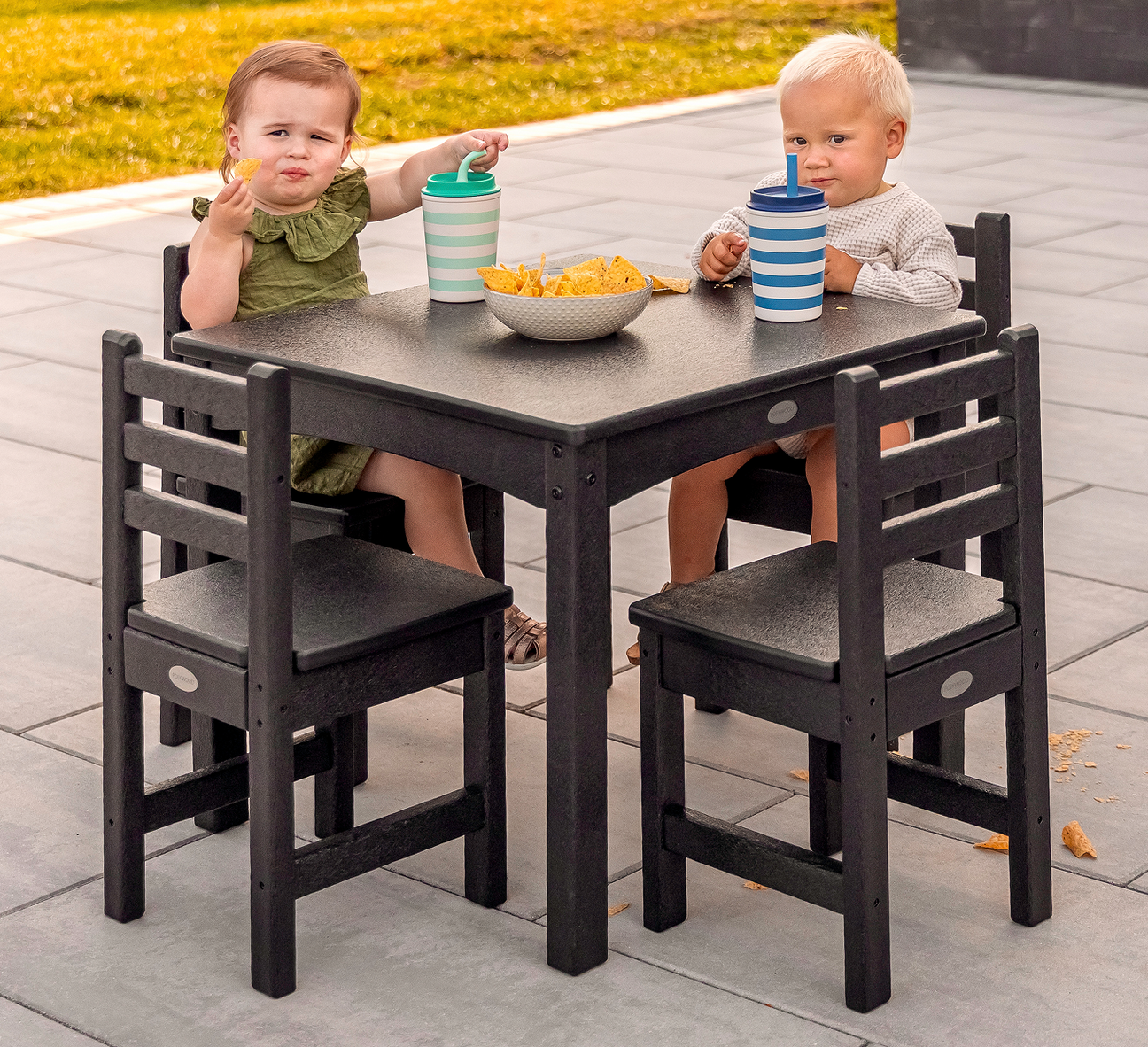
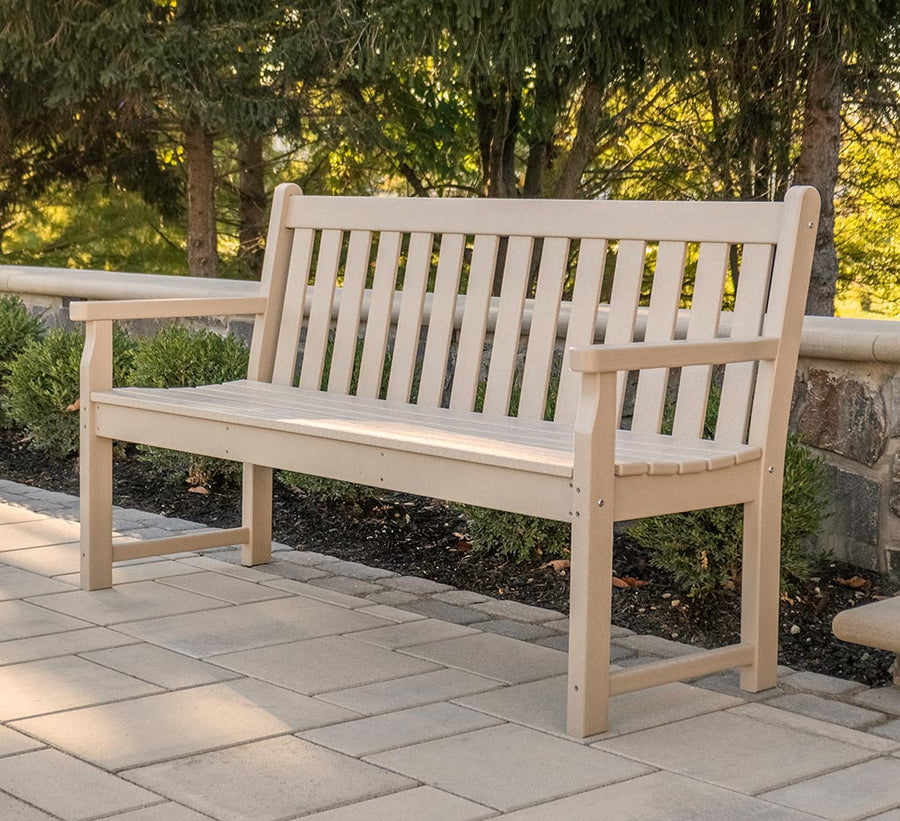
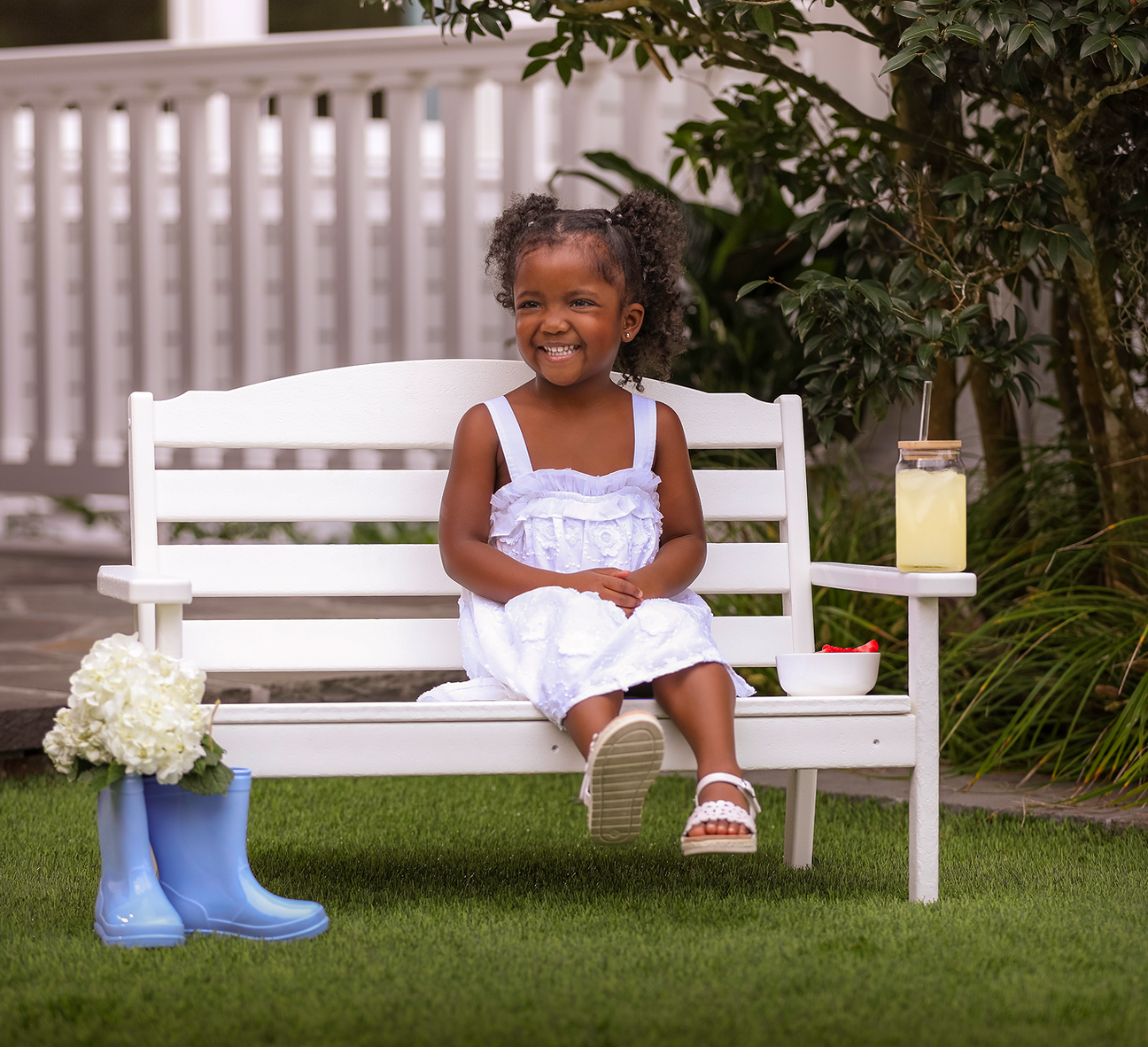
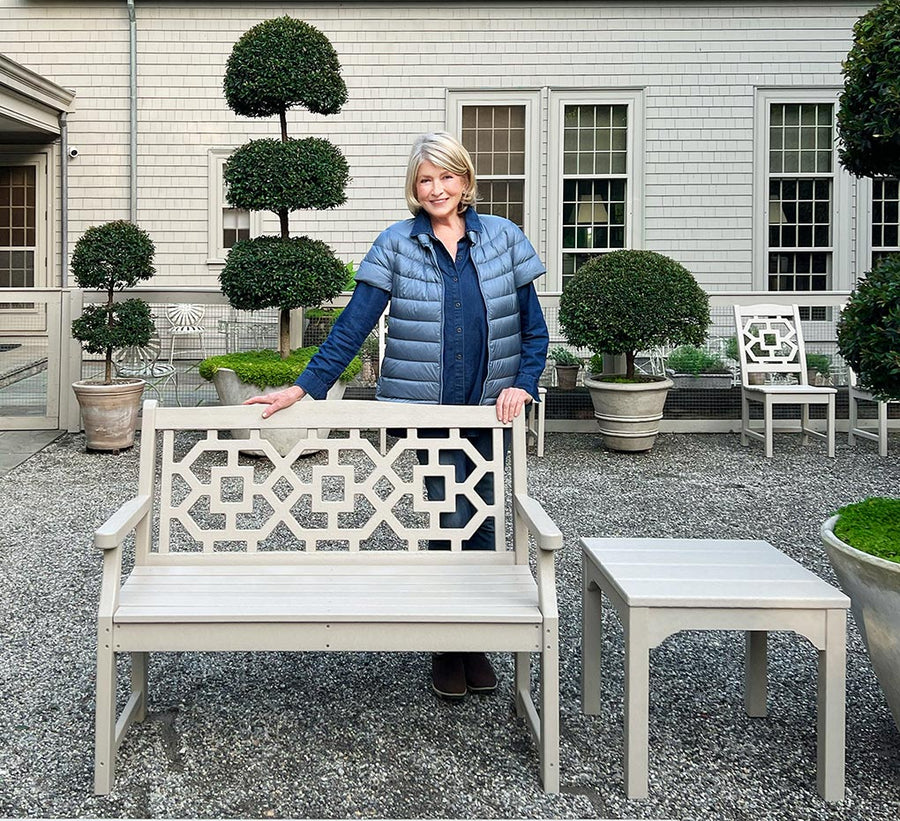
Benches: Great for little ones or squeezing more guests in but doesn’t offer lumbar support.
Folding chairs: Easy to store when not in use but may not feel as sturdy; available style options are often limited.
Tables
In terms of both form and function, a table’s shape and leg style are both important considerations when shopping for outdoor dining furniture.
Square tables: Thanks to their balanced width and depth, square tables encourage conversation among all diners. They fit in well with small and large layouts but may pose a spatial challenge in narrower spaces.
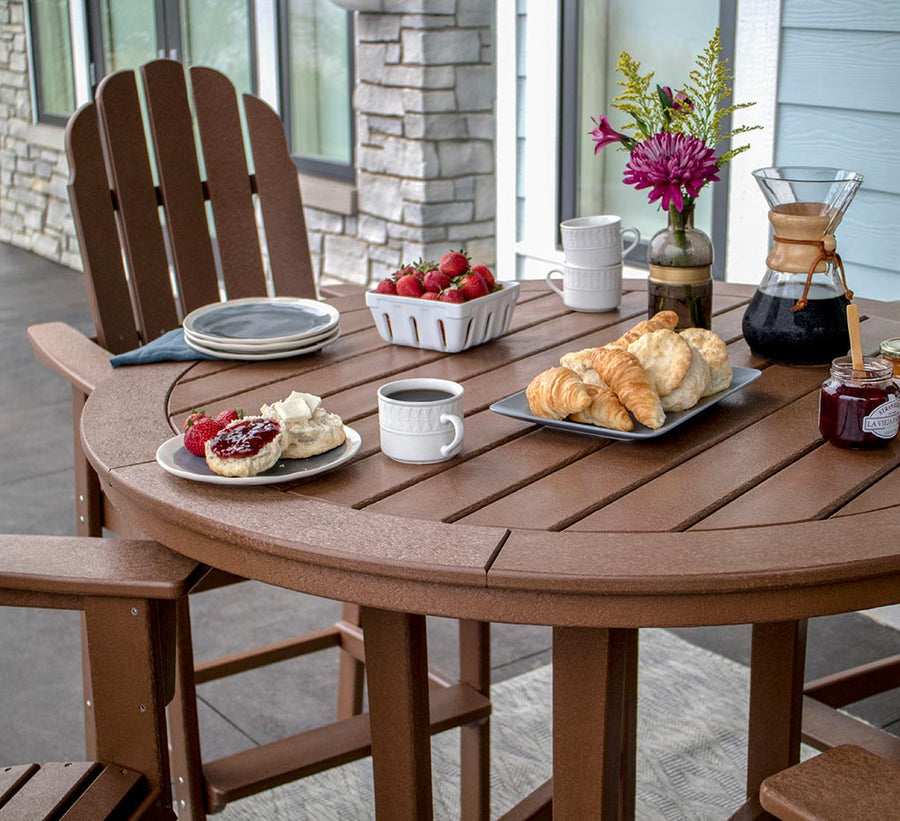
Round tables: Inviting and inclusive, circular tables are great for intimate gatherings and game nights, from a 60-inch round outdoor table to a cozy two-seater. The lack of corners makes them ideal for families with young children, but not the best fit against walls or corners.
NEW! Explore POLYWOOD’s 60-inch round outdoor dining table styles. All-weather designs with more room to seat and serve.
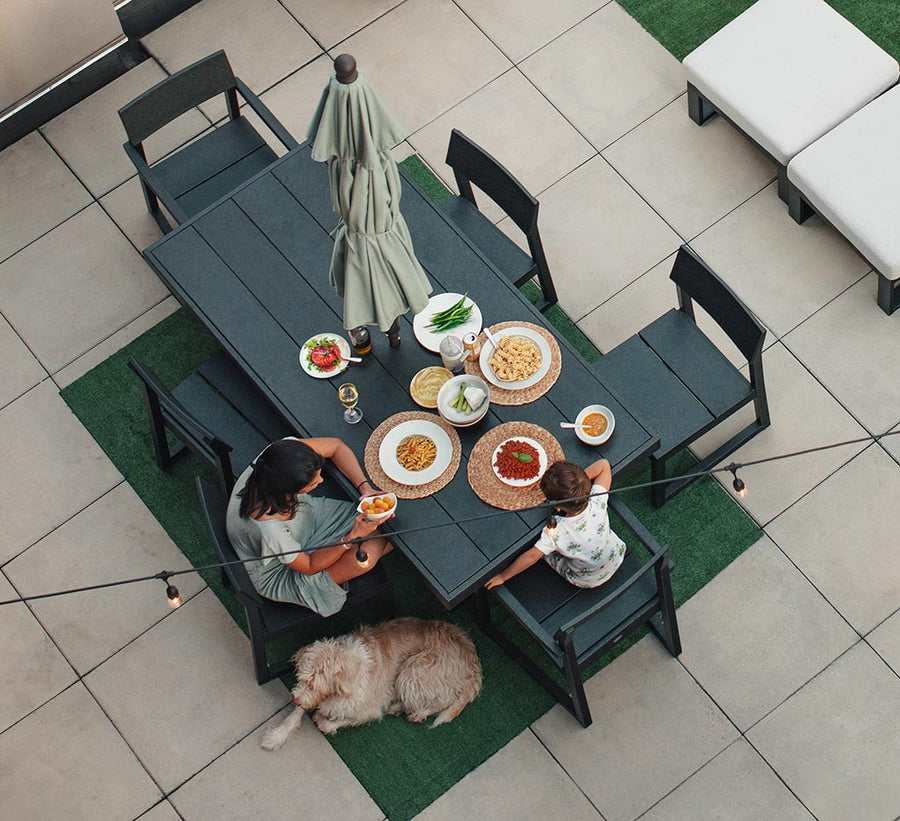
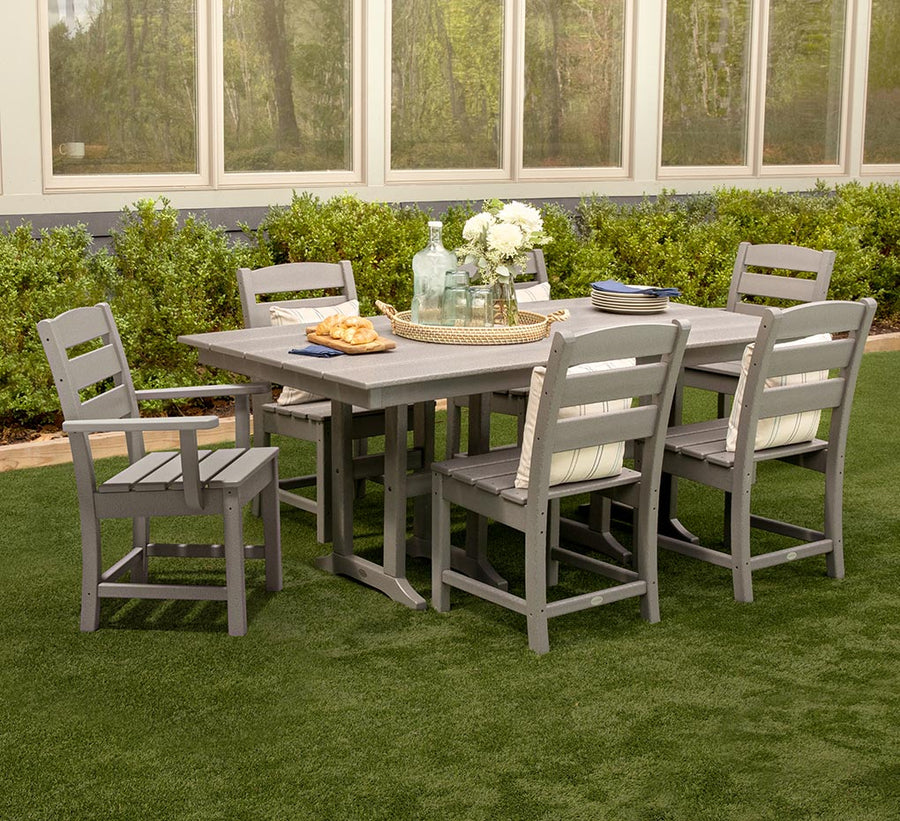
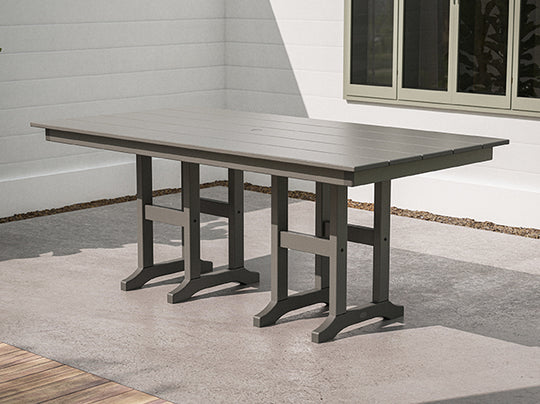
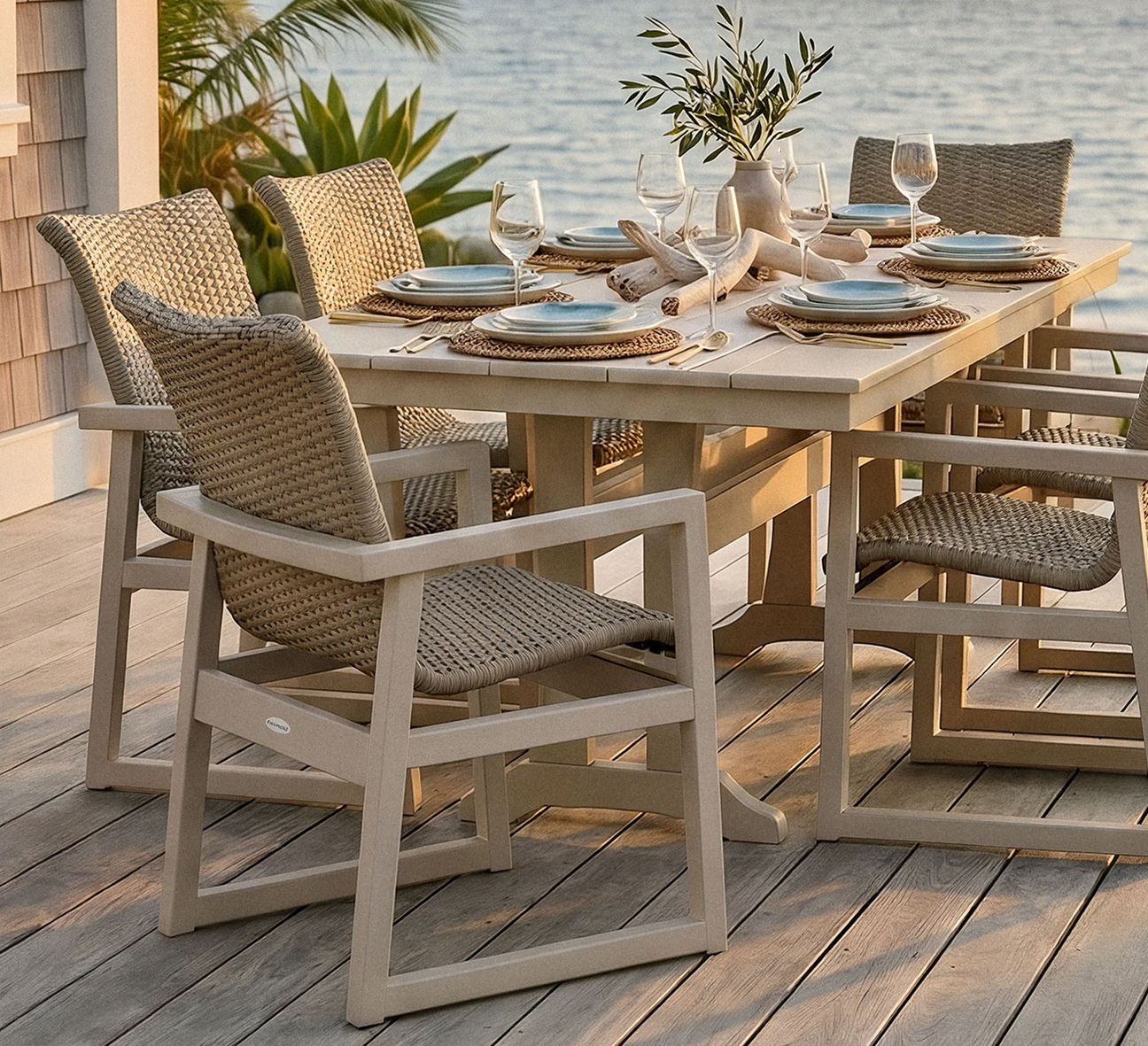
Rectangle table: This is the most common shape and the easiest to accommodate more people, but conversations will not flow as well with the whole group. The long, linear design works best for narrow floor plans.
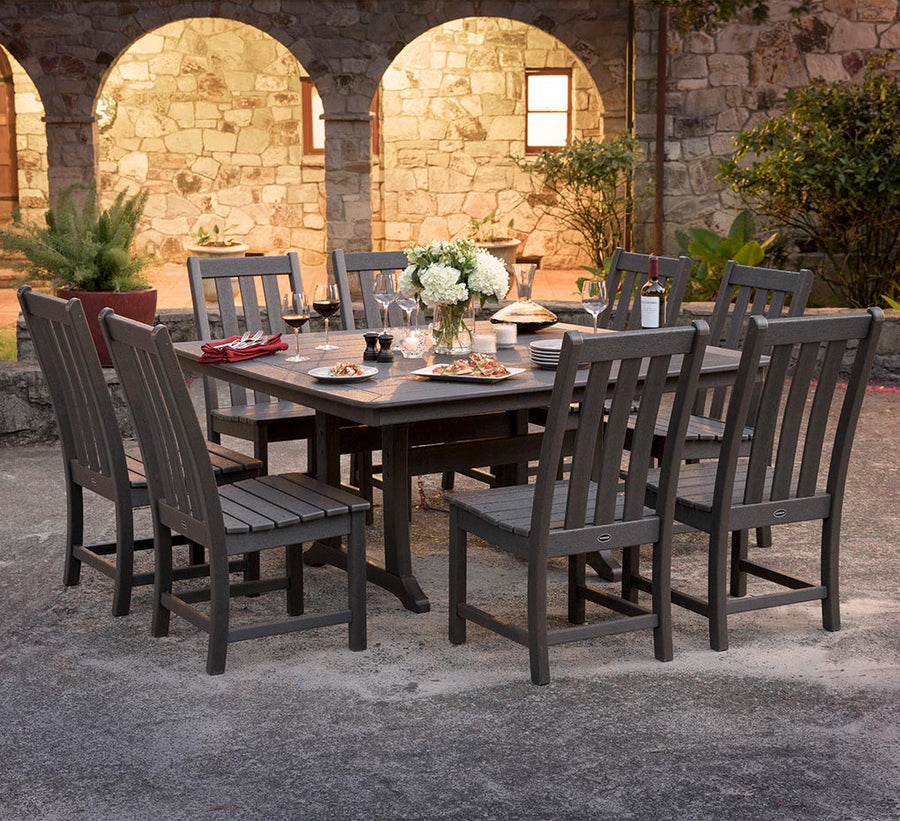
Trestle legs: This leg style features centerline trestle supports that are connected by one or more stretchers, offering generous legroom for all guests and more seating flexibility around the table’s perimeter.
Pedestal legs: A classic design, this leg style features one or more central columns, which frees up the entire length of the table for seating guests. End seats have the most legroom.
Step 5: Pick the Perfect Hue
Your guests will want to relax in comfortable chairs as they enjoy their food and conversations. You can choose chairs designed to match your dining table or mix it up with eclectic designs. For simplicity and ease, you can also buy a complete dining set that comes with a table and two, four, or six matching chairs.
Furniture Color Considerations
What’s your main color scheme?
Before picking your new dining set’s hue, take a big-picture look at your space. Note the color of your home’s exterior and walkways, any current furniture, and the surrounding landscape.
Do you want matching, complementary, or contrasting colors?
With those colors in mind, decide if you want to match this set with your current furniture or existing architectural features, play into nature’s palette, or add contrast with a bold new hue.
What’s your local climate?
Environmental conditions also play a role here. Light colors absorb less heat and may be better suited to hot, sunny places. Mid-tone neutrals like beige and grey camouflage dust and pollen best.
Order POLYWOOD material samples to discover which colors suit your dining space.
Outdoor dining sets are available in many materials. When it comes to choosing the best one, you want to strike the right balance of durability, aesthetics, minimal maintenance, and price. Here’s a snapshot of the most common materials and how they compare.
Softwoods
Teak and Other Hardwoods
Wicker
NOTE: Wicker refers to the weaving technique of both natural and synthetic materials.
Aluminum
HDPE
Step 7: Accessorize
You’ve chosen the best dining set for your outdoor space, but for maximum comfort, you need some essential accessories. And you want ones made with durable all-weather materials that can live outside any time of year and dry quickly after a passing rainstorm.
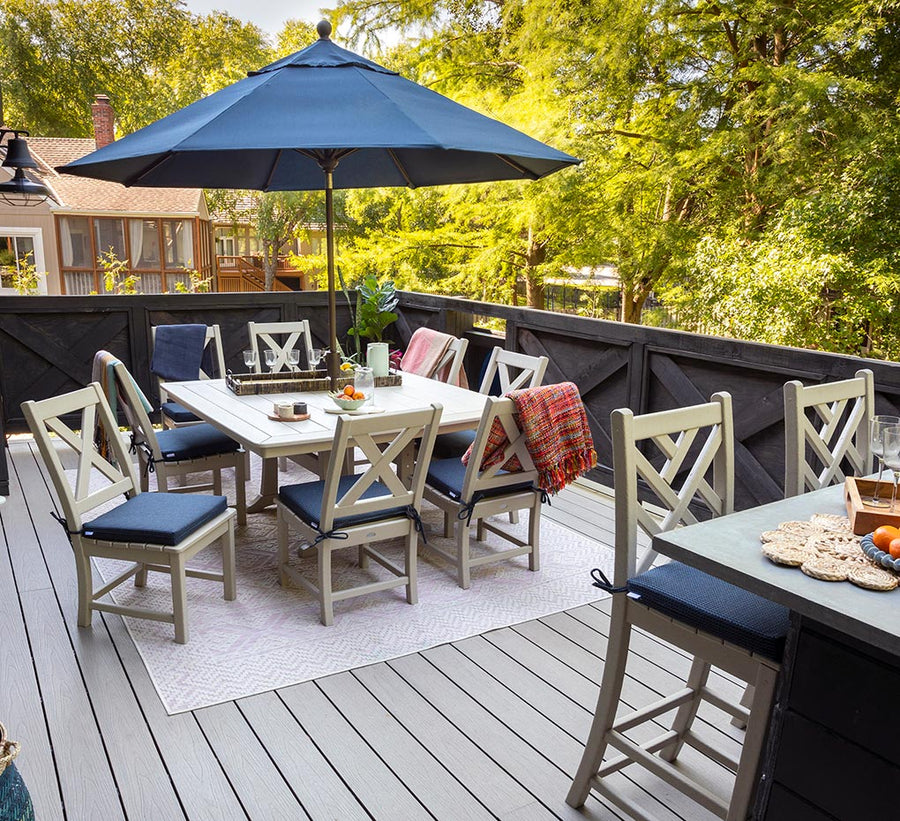
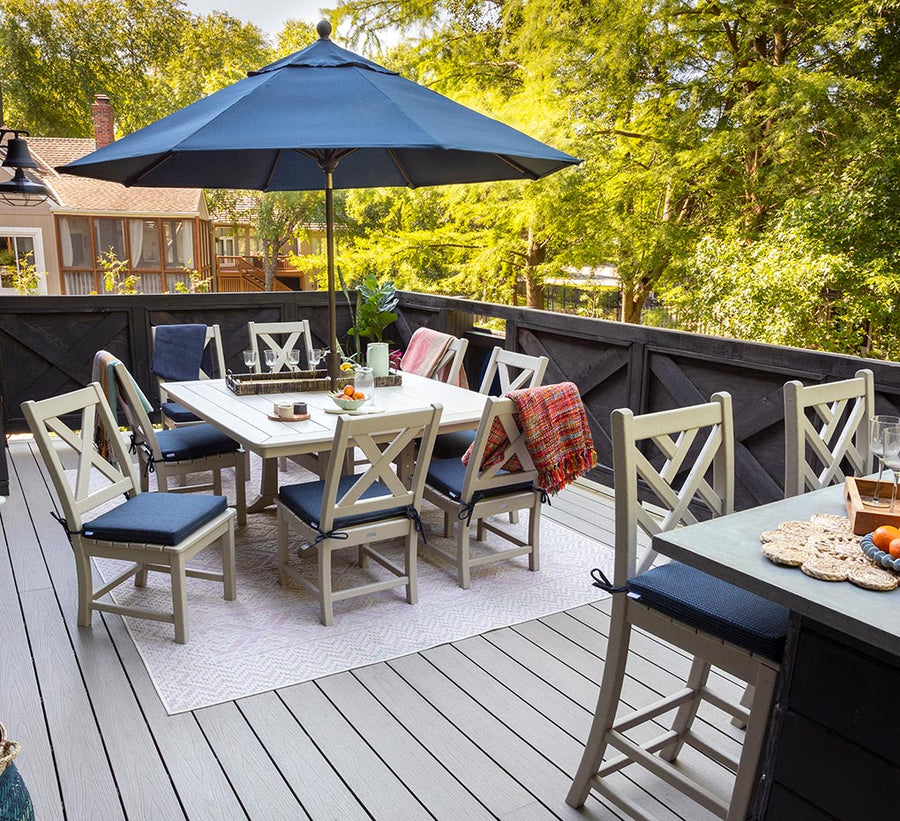
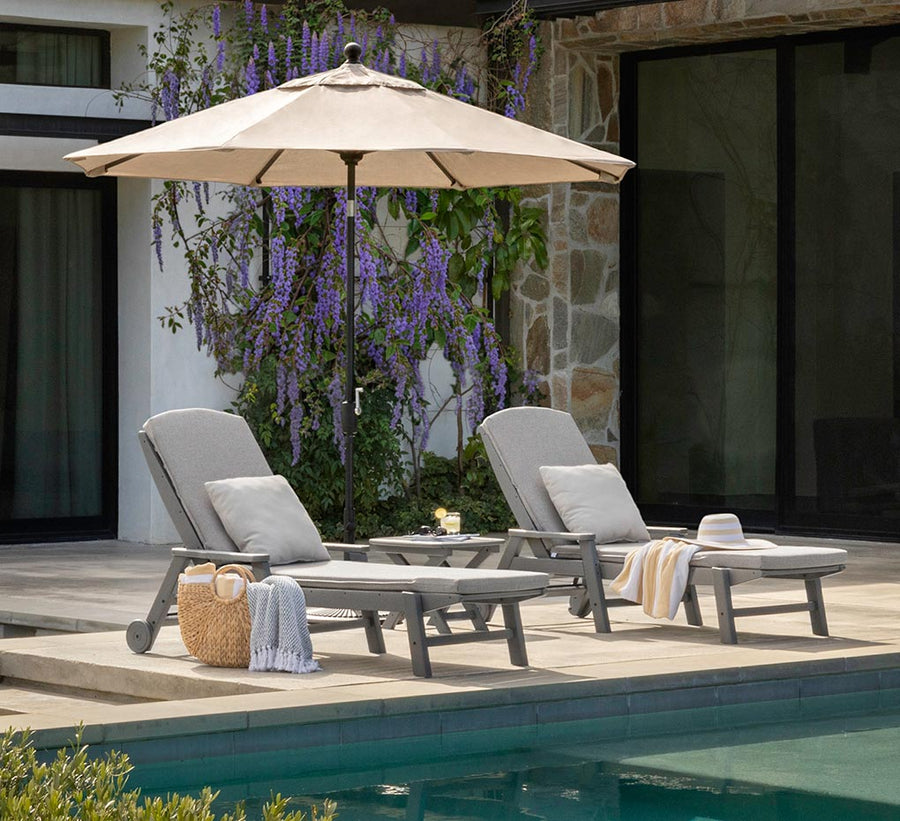
Our adjustable patio umbrellas (available in standard or bar heights and several color combinations) offer the final design touch while giving you the flexibility to dine under the sun or in the shade.
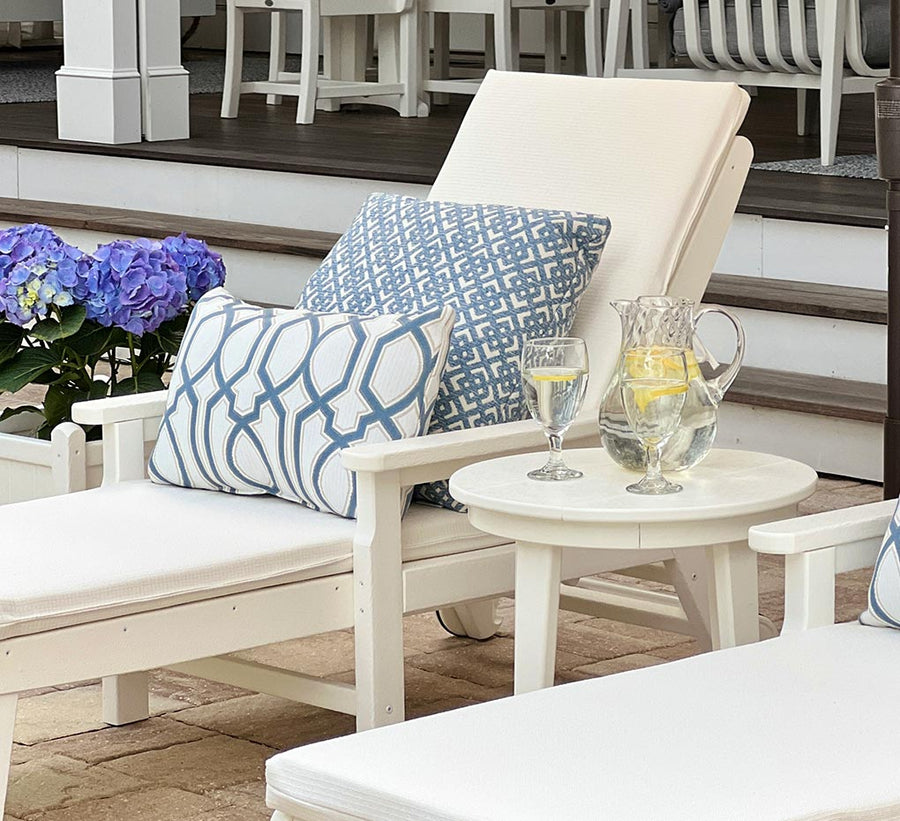
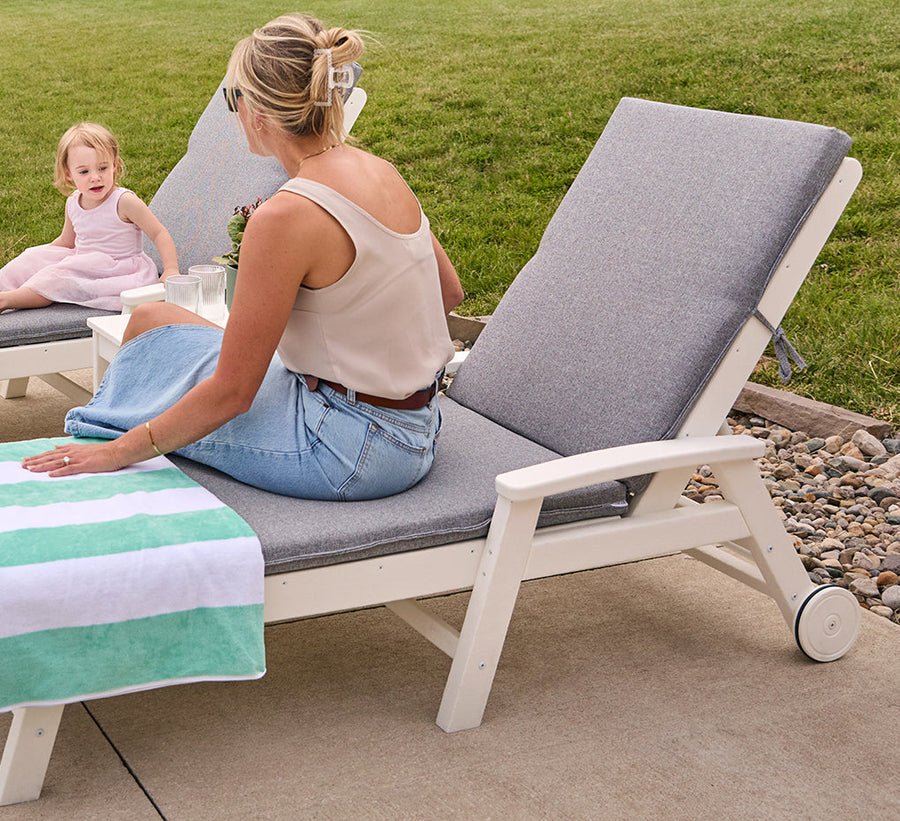
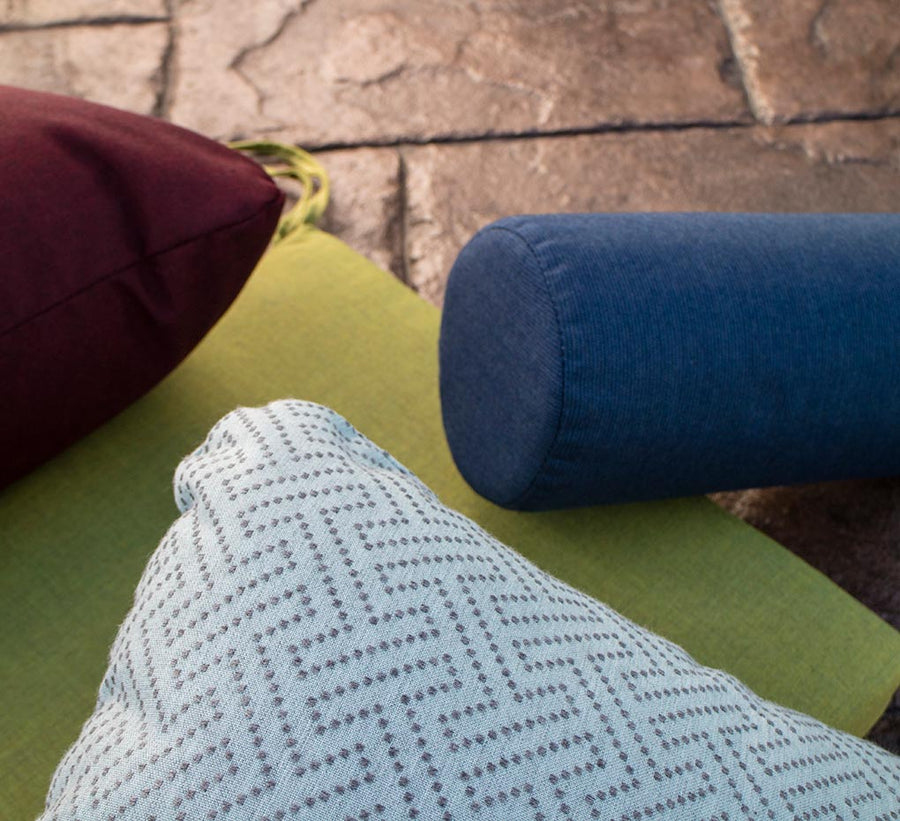
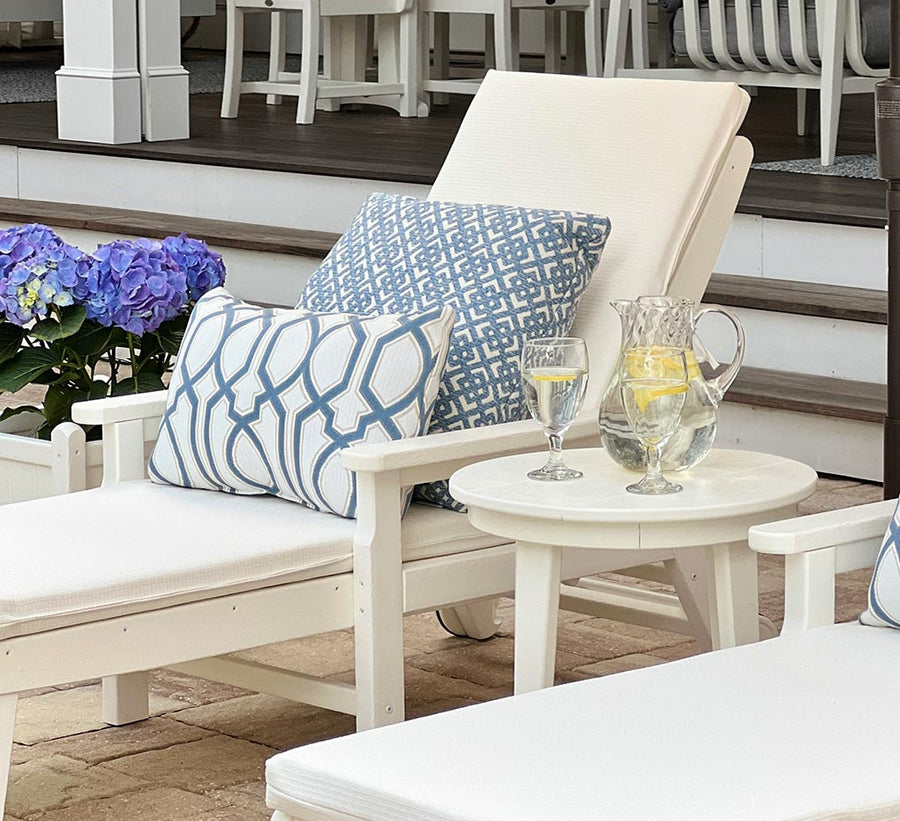
Our pillows and seat cushions add support and keep you comfortable through the last course. Each one is tailored to fit a POLYWOOD dining chair perfectly, but you can customize your look with several performance fabric options.
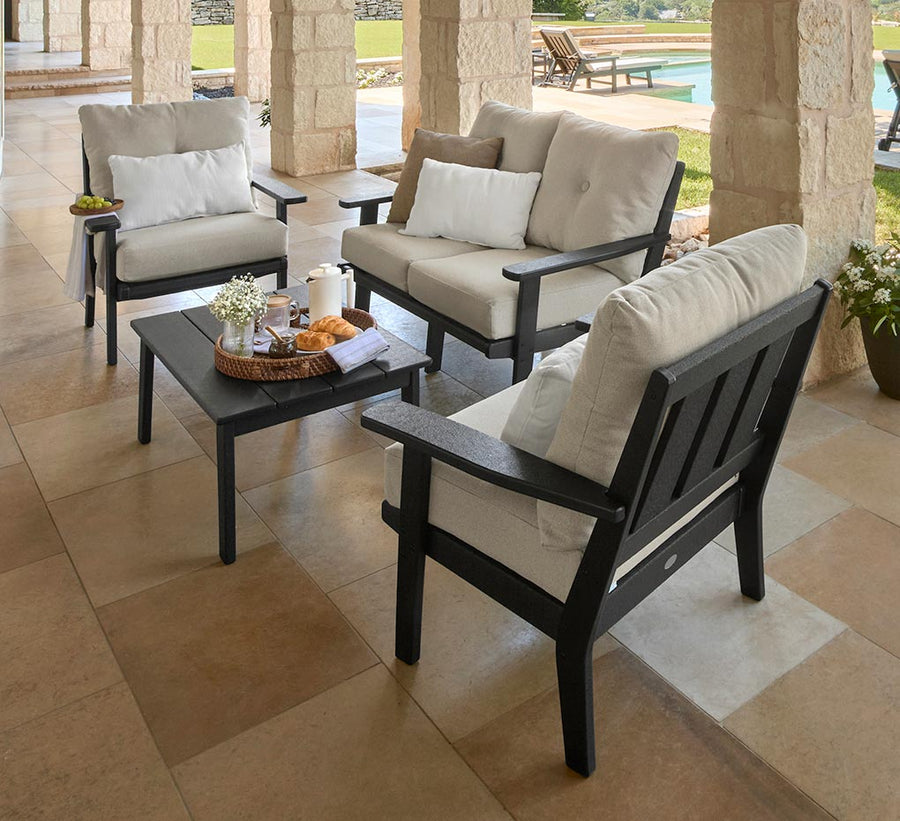
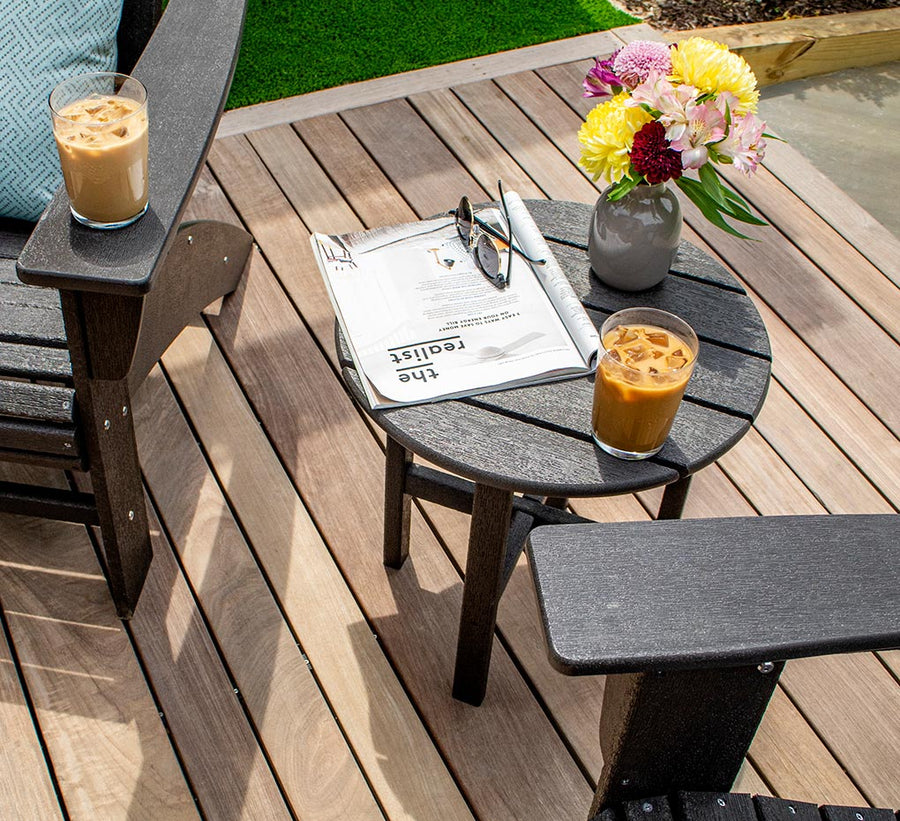
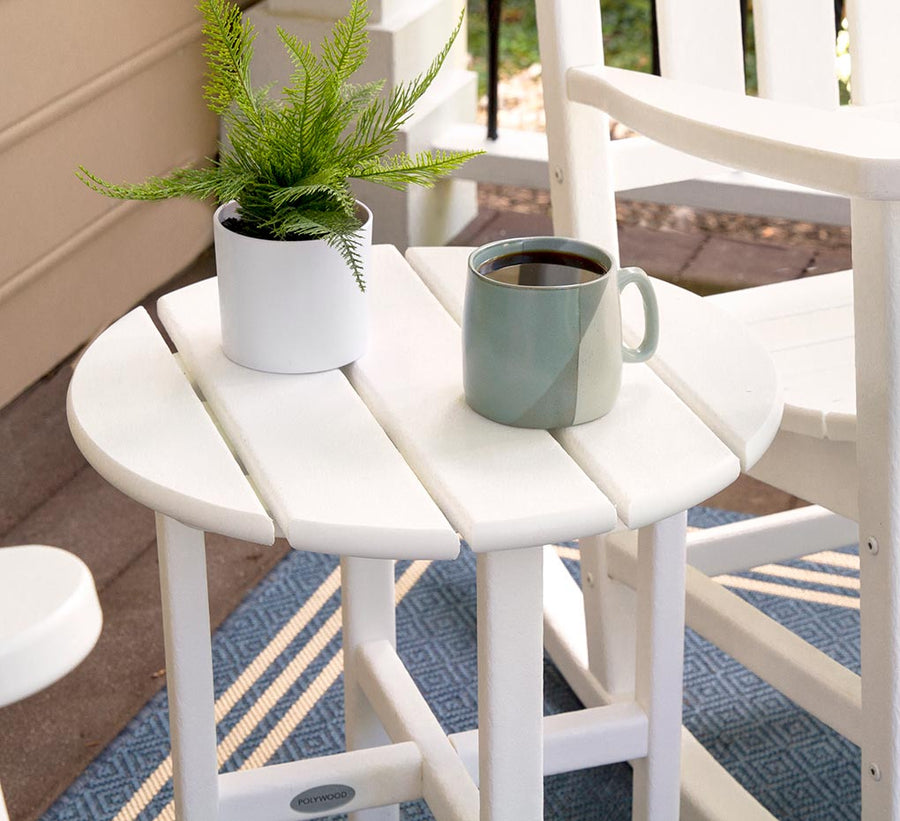
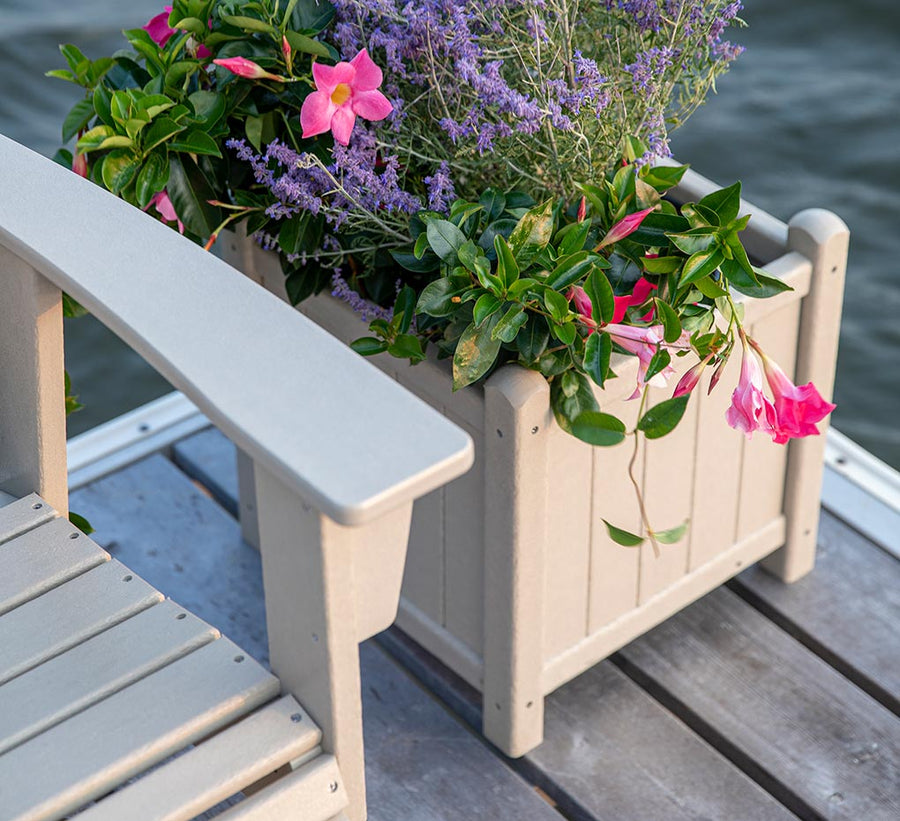
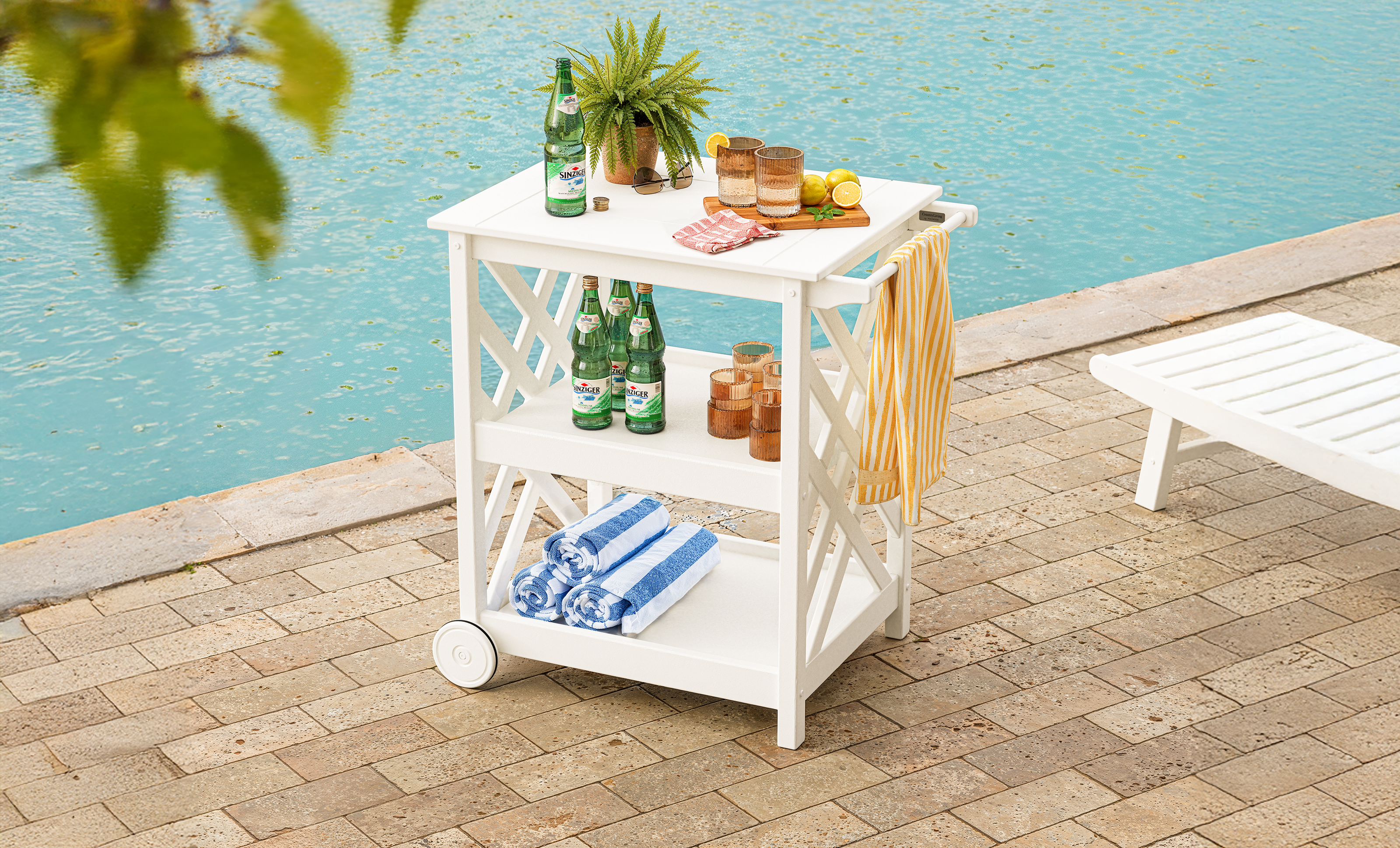
You can even create more serving space with coordinating side tables and other accent furniture.
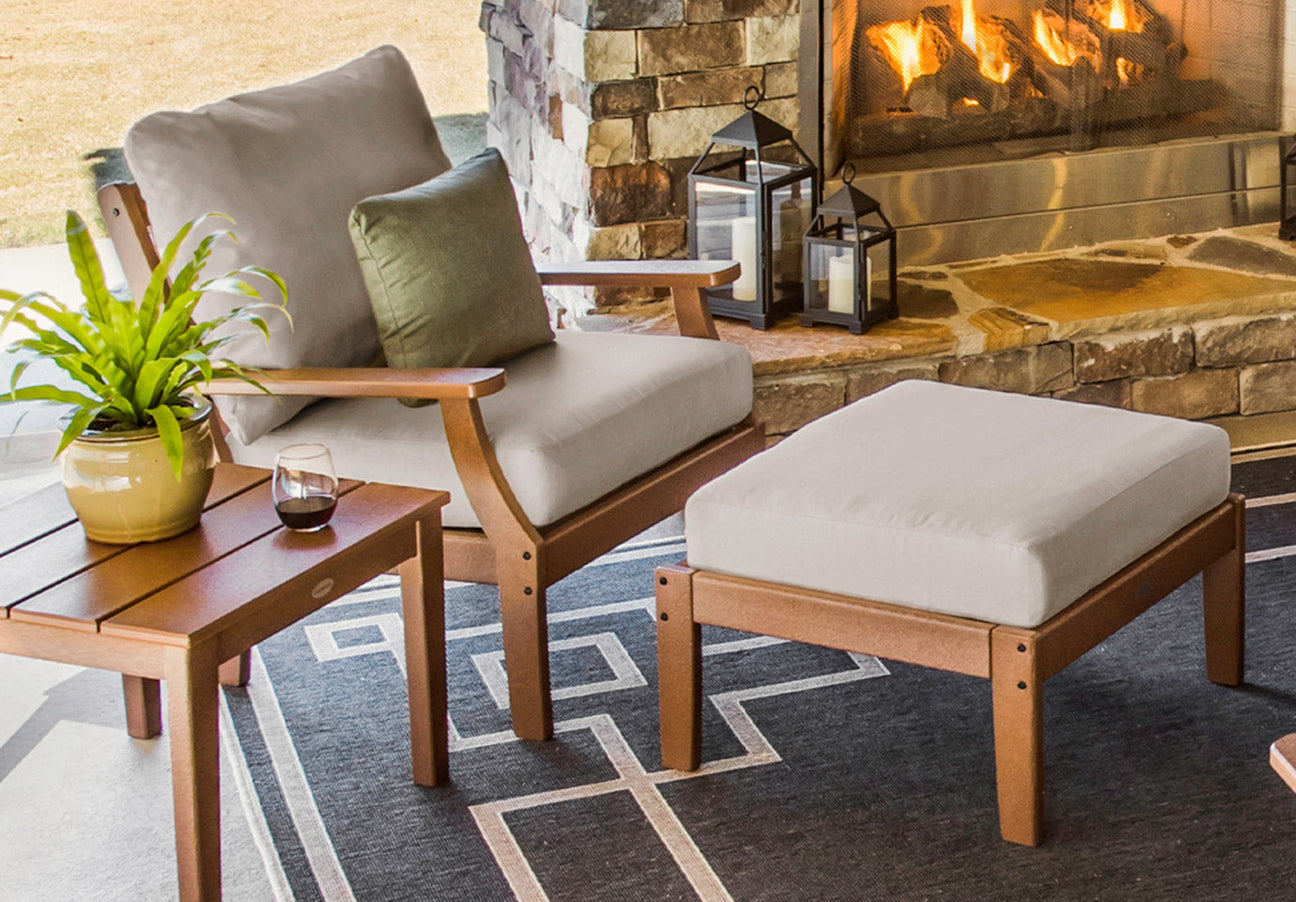
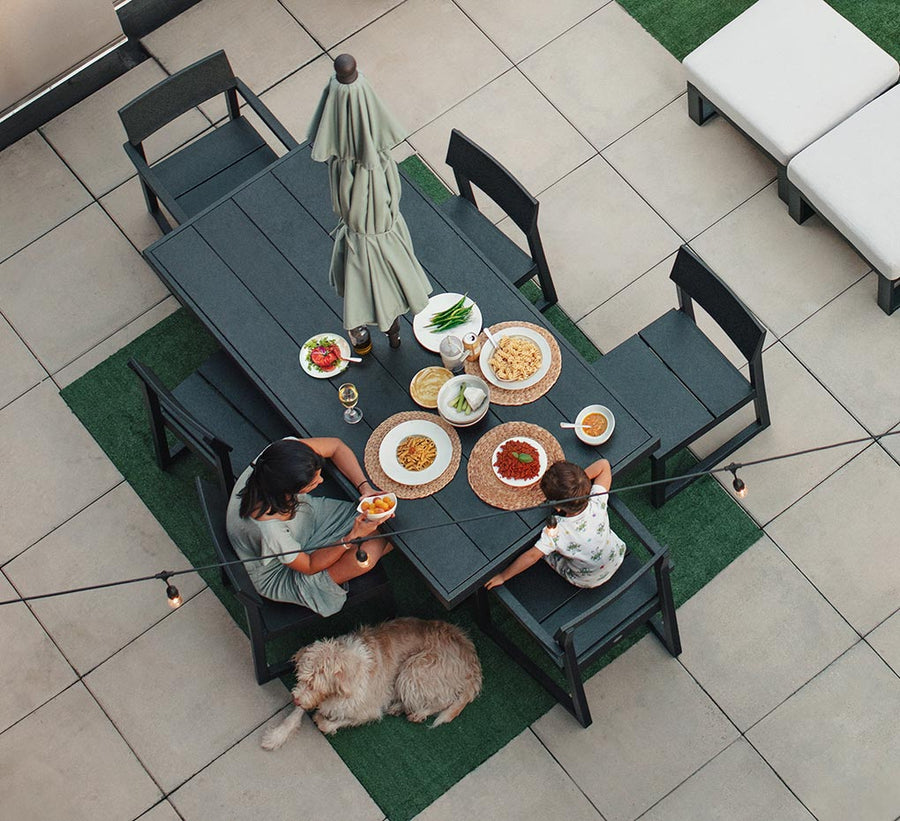
You may choose to lay a rug underneath your dining set to protect the surface of a deck or patio and visually unify the space. An outdoor rug is also a good opportunity to add a little splash of color or personality to your open-air eatery.
Rugs aren’t required, especially if your dining furniture is situated on a grassy lawn—or if you simply like the look, feel, and cost savings of not including one. And if you have an uncovered balcony, patio, or deck that experiences heavy rainfall, keep in mind you may have to expend more energy maintaining your rug.
Even if your space is covered, we recommend opting for an outdoor rug that can weather the elements. Additionally, you should make sure it is large enough to completely cover the square footage beneath your seating area (plus some) to ensure chair legs don’t get caught and tripping hazards are minimized.
If you’re not sure what shape or size rug to buy, we have a few pointers:
For a classic look, pair rugs with tables of the same shape. Choose differing shapes to add contrast and visual interest.
Rugs should be at least two feet larger on all sides than the tables atop them.
Ensure at least 12 inches of space between rugs and the edges of outdoor dining areas.
For example, if you have a 60-inch round outdoor table set, use a rug that's at least nine feet wide. This works best in a space that’s 11 by 11 feet or larger.
What is the most significant item to consider when choosing a dining room set?
When choosing an outdoor dining set, prioritize the size and layout of the space. You need enough room for your furniture as well as three feet of clearance on all sides. First, measure the area, then subtract clearance, and then choose a dining set that fits the remaining open space.
For example, if you have a 10-by-10-foot dining room, subtracting three feet from each side leaves you with four square feet of open space. That’s too small for a 60-inch outdoor round table and chairs, but it will easily accommodate a three-piece bistro set.
Should dining chairs be darker or lighter than a table?
Most often, dining chairs are a shade darker or the same color as the paired table. But this isn’t a hard-and-fast rule. The best combination depends on the desired aesthetic. If you’re aiming for a fresh and airy breakfast nook, choose light-on-light colors. For a high-contrast look in your rooftop bar, gather bright stools around a moody-hued table.
Are glass dining tables out of style in 2026?
Glass dining tables remain popular in 2026. Their transparent tops offer versatility, fitting various design styles. Currently, there's a trend toward mixed materials, such as a 60-inch round glass outdoor table with a metal base and textured fabric upholstered chairs. However, glass can be susceptible to fluctuating temperatures and other challenges—consider alternatives like HDPE for greater durability.
What's the best material for an outdoor dining set?
The best materials for an outdoor dining set are high-density polyethylene or aluminum. They are very durable and can resist weather, needing little maintenance. You can leave this furniture outside all year without any protection. To make cleaning easier in the future, use durable covers. Just choose the right size, like a 60-inch round outdoor table cover for a large six-person circular table.
Sarah is a writer and editor based in Asheville, North Carolina. When not writing words for POLYWOOD, you can likely find her on a yoga mat, wandering in the woods, or daydreaming about her next travel destination.













 POLYWOOD


